Young Galaxy Cluster
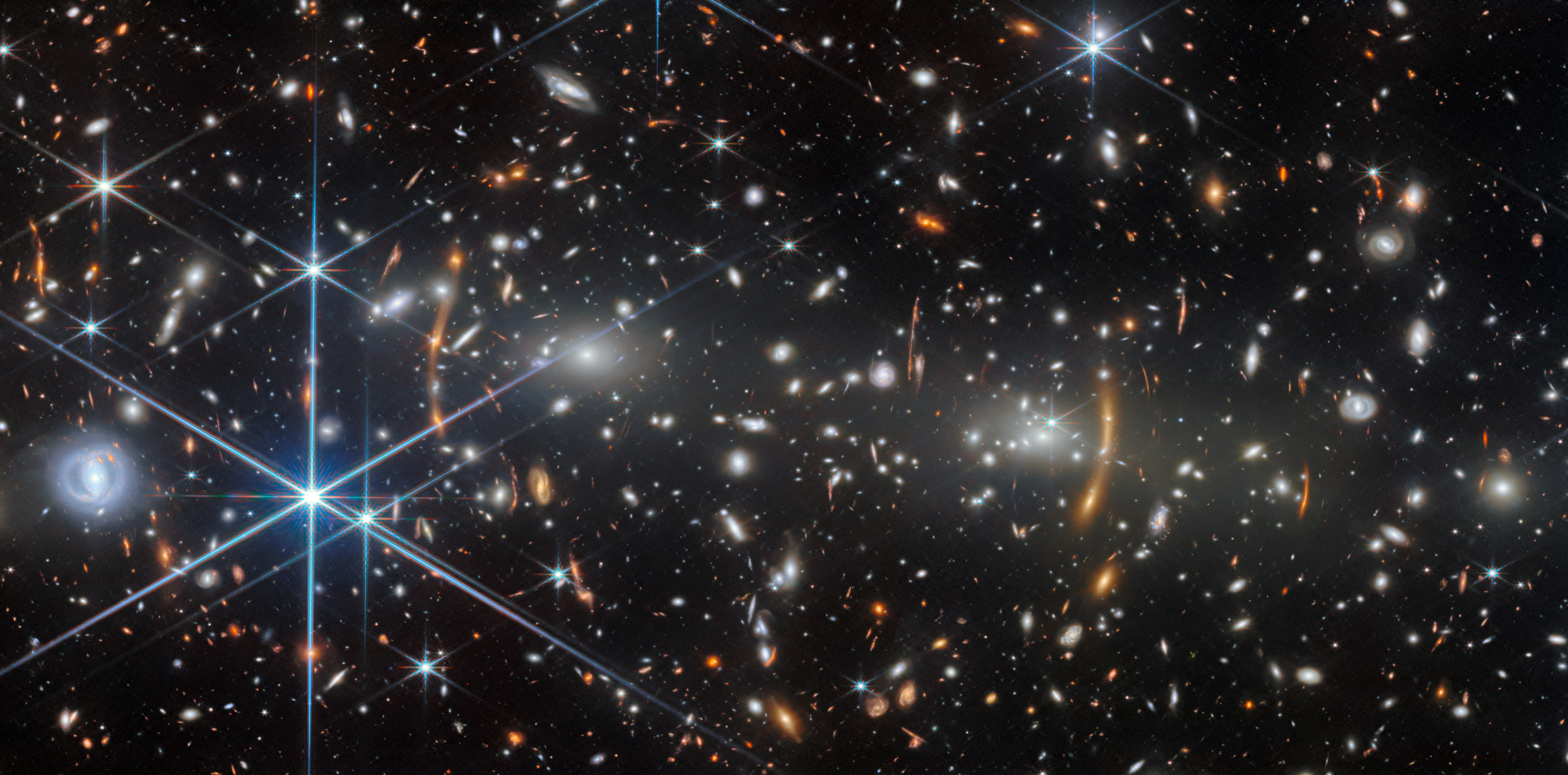
NASA’s James Webb Space Telescope takes us 4.4 billion years in the past with this July 3, 2026, image of a young galaxy cluster, MACS J0553.4-3342. The cluster is composed of two actively merging sub-clusters, roughly equal in mass. Each sub-cluster is anchored on an immen
Search
Suggested Searches
- Climate Change
- Artemis
- Expedition 64
- Mars perseverance
- SpaceX Crew-2
- International Space Station
- View All Topics A-Z
- Home
- Missions
- Humans in Space
- Earth
- The Solar System
- The Universe
- Science
- Aeronautics
- Technology
- Learning Resources
- About NASA
- Español
Featured
  
Back
- Search All NASA Missions
- A to Z List of Missions
- Upcoming Launches and Landings
- Spaceships and Rockets
- Communicating with Missions
- Artemis
- James Webb Space Telescope
- Hubble Space Telescope
- International Space Station
- OSIRIS-Rex
- Explore Earth Science
- Climate Change
- Earth, Our Planet
- Earth Science in Action
- Earth Multimedia
- Earth Data
- Earth Science Researchers
- The Sun
- Mercury
- Venus
- Earth
- The Moon
- Mars
- Jupiter
- Saturn
- Uranus
- Neptune
- Pluto & Dwarf Planets
- Asteroids, Comets & Meteors
- The Kuiper Belt
- The Oort Cloud
- Skywatching
- Exoplanets
- The Search for Life in the Universe
- Stars
- Galaxies
- Black Holes
- The Big Bang
- Dark Energy
- Dark Matter
- Earth Science
- Planetary Science
- Astrophysics & Space Science
- The Sun & Heliophysics
- Biological & Physical Sciences
- Lunar Science
- Citizen Science
- Astromaterials
- Aeronautics Research
- Human Space Travel Research
- Science in the Air
- NASA Aircraft
- Flight Research Innovation
- Supersonic Flight
- Air Traffic Solutions
- Green Aviation Tech
- Drones & You
- Technology Transfer & Spinoffs
- Space Travel
- Living in Space
- Lunar Surface Technology
- Manufacturing and Materials
- Robotics
- Science Instruments
- Computing
- For Kids and Students
- For Educators
- For Colleges and Universities
- For Professionals
- Science for Everyone
- Requests for Exhibits, Artifacts, Speakers & Flyovers
- STEM Engagement at NASA
- NASA's Impacts
- Centers and Facilities
- Directorates
- Organizations
- People of NASA
- Careers
- Internships
- Our History
- Doing Business with NASA
- Get Involved
- Contact
- News Releases
- Recently Published
- Video Series on NASA+
- Podcasts & Audio
- Blogs
- Newsletters
- Social Media
- Media Resources
- Events
- Upcoming Launches & Landings
- Virtual Guest Program
- NASA+
- Images
- NASA Live
- NASA Apps
- Podcasts
- Image of the Day
- e-Books
- 3D Resources
- Interactives
- STEM Multimedia
- NASA Brand & Usage Guidelines
Featured
  
Highlights
  
Highlights
  
Highlights
  
Featured
  
Highlights
  
Highlights
  
Highlights
  
Featured

Featured
  
Highlights
  
1 min read
# Young Galaxy Cluster
!The headshot image of HQ Web Team
HQ Web Team
Jul 16, 2026
Image Article
ESA/Webb, NASA & CSA, S. Fujimoto
NASA’s James Webb Space Telescope takes us 4.4 billion years in the past with this July 3, 2026, image of a young galaxy cluster, MACS J0553.4-3342. The cluster is composed of two actively merging sub-clusters, roughly equal in mass. Each sub-cluster is anchored on an immensely bright and massive elliptical galaxy, easily identifiable as the two brightest points in the center of this scene with the largest glowing halos around them.
_Image credit: ESA/Webb, NASA & CSA, S. Fujimoto_
Was this page helpful?
Δ
Was this page helpful?
Yes
No
×
Notifications