Xona Launches Pulsar Verification for LEO PNT Hardware
Silicon Valley-based Xona Space Systems has introduced 'Pulsar Verified' to standardize receiver compatibility for its upcoming low-Earth orbit navigation constellation.
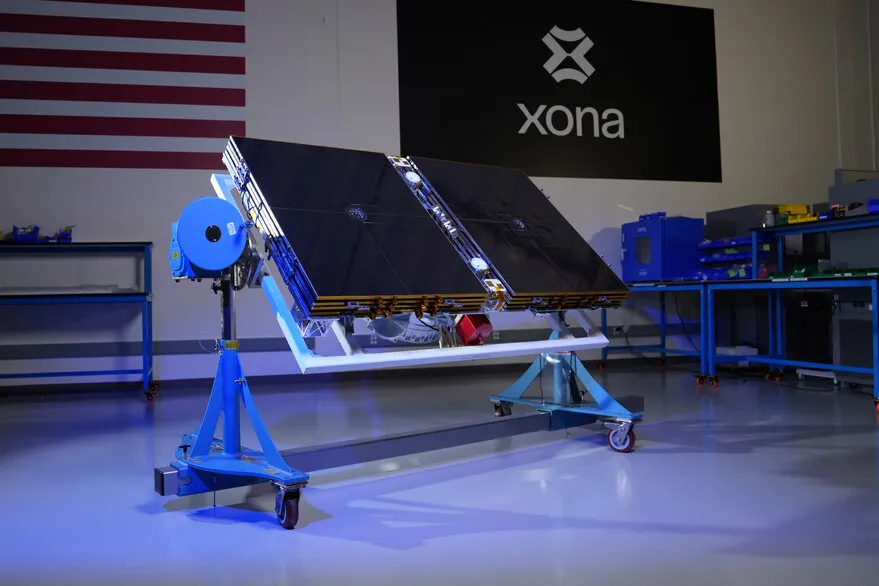
Hardware Standardization for LEO Navigation
Xona Space Systems is shifting its focus from orbital deployment to the user segment. According to SpaceNews, the California-based startup has launched Pulsar Verified, a technical program designed to certify that third-party receivers and simulation equipment are fully compatible with its Pulsar positioning, navigation, and timing (PNT) constellation.
The Partner Ecosystem
The initiative addresses a critical bottleneck in satellite services: hardware availability. Current partners include industrial heavyweights such as Trimble, Septentrio, STMicroelectronics, Safran, StarNav, and Keysight. While Xona’s infrastructure remains high-altitude, CEO Brian Manning emphasized that the service is functionally inert without validated user equipment.
Existing milestones include:
Simulators: Safran’s Skydel and Keysight’s PNT X have already achieved verification.
Receivers: Compatible hardware has begun shipping to customers globally.
* Integration: Xona is collaborating with major GNSS chipset manufacturers to integrate Pulsar signals into established commercial supply chains.
Signal Integrity and Orbital Timeline
Unlike traditional MEO-based GPS, Xona’s LEO network promises centimeter-level precision and signal strength roughly 100 times more resilient to jamming and spoofing. Following the launch of Pulsar-0 in June 2025, Xona has processed 22 terabytes of data and confirmed tracking success across four continents, including stations in Finland and Australia.
With six additional satellites scheduled for launch later this year, the company expects to transition into beta-level testing. Supported by a $170 million Series C round and a new assembly facility in Burlingame, Xona aims to provide a high-integrity alternative to legacy GNSS for autonomous systems, robotics, and critical infrastructure.