Webb Resolves Supersonic Outflows in Stellar Nursery
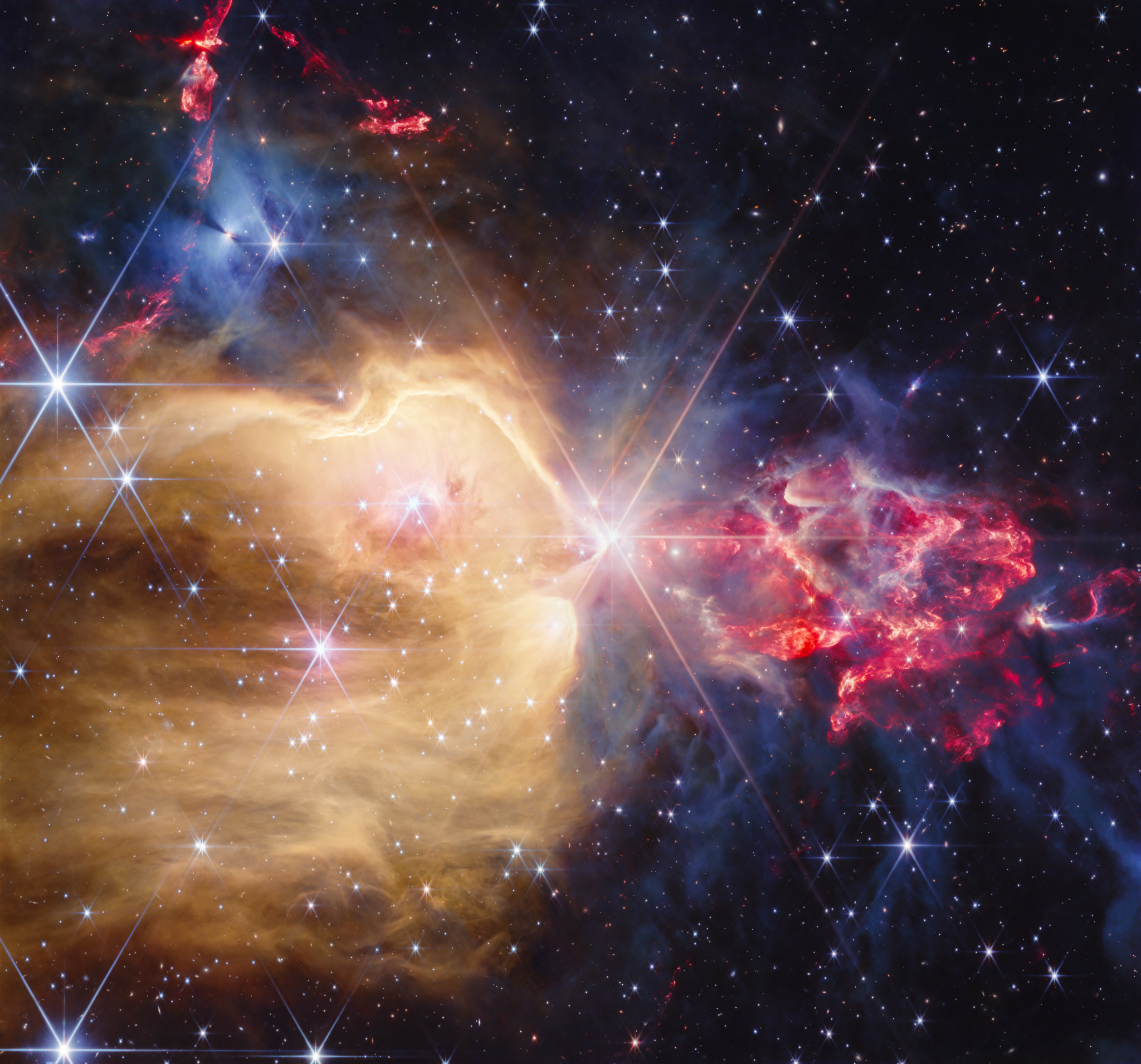
New imagery from the James Webb Space Telescope reveals high-velocity stellar jets erupting from newborn stars, providing unprecedented detail into the mechanics of star formation.
Technical Analysis: Protostellar Feedback
Recent telemetry from the James Webb Space Telescope (JWST) has provided high-resolution imaging of Herbig-Haro objects—dynamic regions surrounding newborn stars. According to NASA Breaking News, the observatory’s infrared sensors have successfully pierced dense nebular dust to capture the precise structure of stellar jets. These phenomena occur when energized gas, ejected by a protostar, collides with the surrounding medium at supersonic velocities.
Kinetic Mechanics
The captured data highlights the interaction between stellar outflows and the interstellar medium. As the protostar accretes mass, it ejects highly collimated streams of plasma along its rotational axis. The resulting shockwaves heat the surrounding gas, causing it to glow in the infrared spectrum—a wavelength Webb was specifically engineered to detect with high sensitivity. Unlike previous visual-spectrum observations, these new captures reveal the complex, knotted structures within the jets, indicating episodic bursts of activity during the star’s formation phase.
Operational Context
This observation underscores Webb's role as the primary instrument for investigating the 'dark' phases of stellar evolution. By resolving the morphology of these jets, researchers can better calculate the momentum and energy transferred from the star to its parent cloud, a critical variable in determining the final mass of the star and the potential for planetary system development. The data confirms that stellar feedback is a primary regulator of star formation efficiency in galactic nurseries.