Webb Resolves Kinetic Turbulence in Stellar Nursery
New data from the James Webb Space Telescope reveals the high-energy mechanics of stellar formation, capturing protostellar jets disrupting a distant nebula.
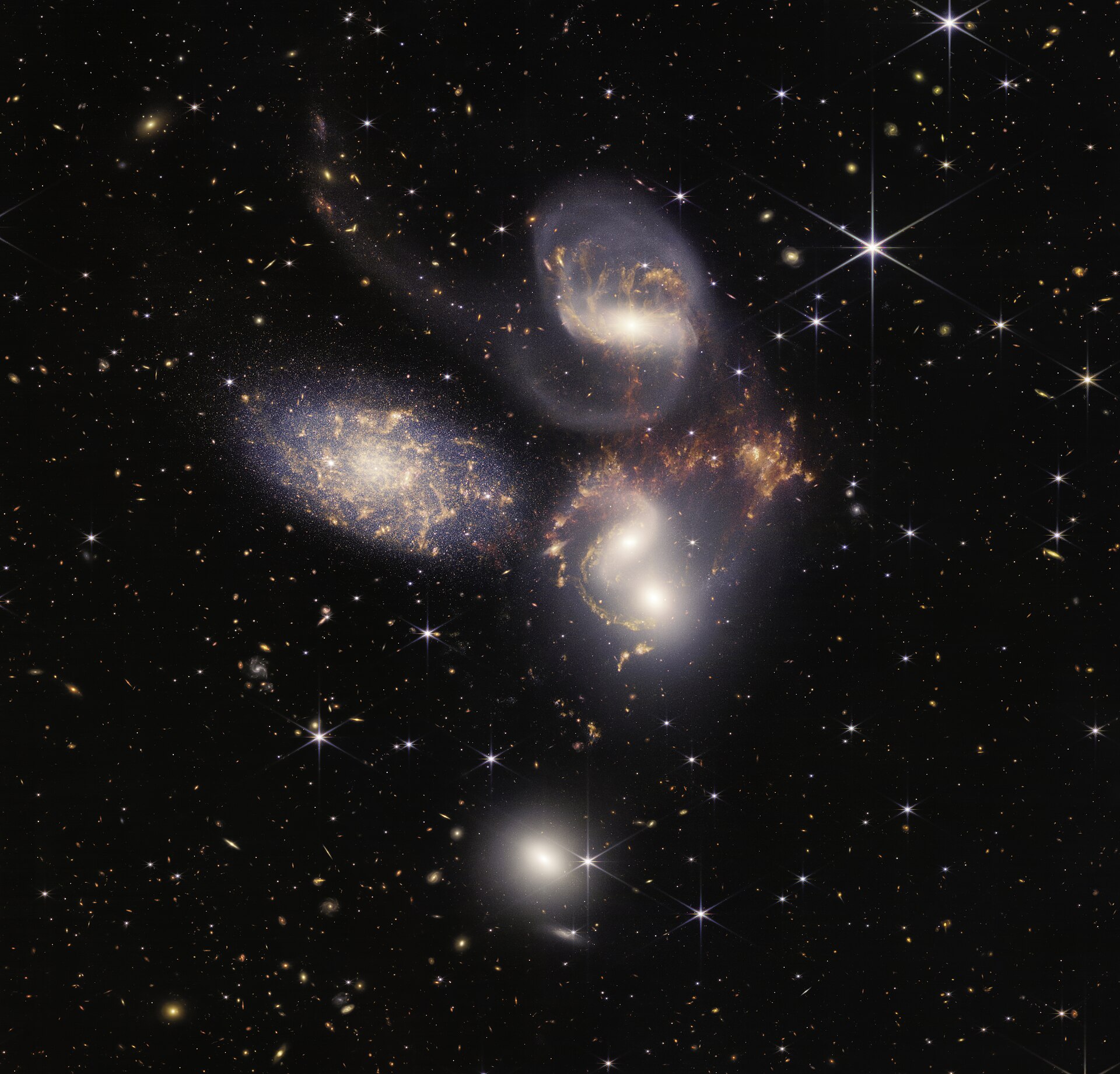
DATA FEED: NIRCam/MIRI STACKED IMAGERY
The James Webb Space Telescope (JWST) has delivered high-resolution imagery documenting the violent environmental impact of stellar birth within a dense nebula. According to the European Space Agency (ESA), the new captures focus on protostellar jets—massive columns of ionized gas ejected by newborn stars—as they collide with surrounding interstellar matter.
KINETIC ANALYSIS
These jets are the primary mechanism by which young stars regulate their growth. As a star collapses from a molecular cloud, it consumes material while ejecting a fraction of it at supersonic speeds along its rotational axis. The ESA reports that Webb’s Near-Infrared Camera (NIRCam) and Mid-Infrared Instrument (MIRI) were able to pierce through the thick dust veils that obscure these processes in visible light.
The resulting imagery reveals a "commotion" of shockwaves and turbulence. The jets act as kinetic excavators, carving out cavities within the nebula and triggering secondary star formation by compressing nearby gas pockets. The precision of the JWST instrumentation allows researchers to map the chemical composition and velocity of these outflows with unprecedented accuracy.
SYSTEM STATUS
Observational data confirms that the interaction between these jets and the parent nebula is far more chaotic than previously modeled. The energy transfer observed suggests that stellar feedback plays a critical role in determining the final mass of stars and the eventual dissipation of the host cloud. This breakthrough provides European astrophysicists with the raw telemetry needed to refine galactic evolution models.