WEBB IR DATA ILLUMINATES LION NEBULA STRUCTURES
New deep-space imaging from the James Webb Space Telescope has captured high-resolution infrared data of the Lion Nebula, providing fresh insights into stellar formation within the complex.
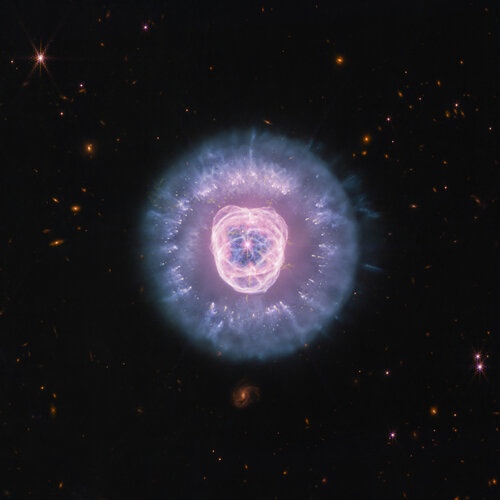
DATA ACQUISITION REPORT
The James Webb Space Telescope (JWST) has deployed its advanced infrared sensors to capture the intricate architecture of the Lion Nebula, officially designated as Sh2-132. The newly released imagery, processed through the European Space Agency (ESA) infrastructure, reveals high-velocity stellar winds and ionized gas regions previously obscured by interstellar dust.
SPECTRAL ANALYSIS
According to ESA, the data confirms a highly active environment within the constellation Cepheus, approximately 10,000 light-years from Earth. By operating in the infrared spectrum, Webb’s instrumentation has successfully pierced through the dense, light-blocking gaseous shrouds that define the nebula’s perimeter. This allows for a detailed mapping of the internal radiation fields and the specific dynamics of the newborn stars at its core.
OPERATIONAL CONTEXT
The Lion Nebula serves as a critical laboratory for understanding the lifecycle of massive stars. The interaction between the intense ultraviolet radiation from these stars and the surrounding cold gas produces the distinct morphological features visible in the terminal-grade imagery. ESA analysts noted that the "roaring" appearance of the nebula is a direct result of these thermal pressures sculpting the interstellar medium.
These findings contribute to the ongoing mission of ESA and its international partners to catalog the chemical and physical evolution of the Milky Way. The data facilitates a more precise measurement of star-formation rates in the outer reaches of the galaxy, ensuring that European researchers remain at the forefront of astrophysical discovery.