Webb Identifies Nature of Low-Mass Brown Dwarf W1935
New observations from the James Webb Space Telescope have clarified the classification of W1935, distinguishing the 'failed star' from giant exoplanets through methane emission signatures.
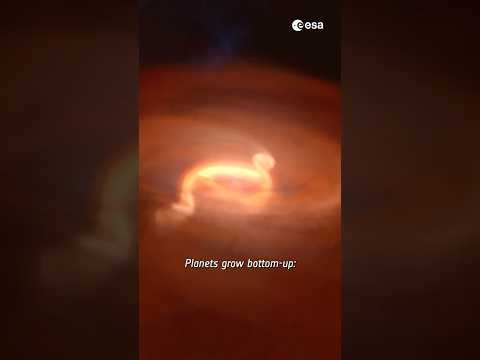
Spectroscopic Analysis via JWST
Deep-space observation data from the James Webb Space Telescope (JWST) has effectively resolved the classification ambiguity surrounding celestial object W1935. According to reports from the ESA YouTube channel, researchers utilized Webb’s high-sensitivity infrared instrumentation to determine whether this low-mass body should be categorized as a rogue gas giant or a brown dwarf.
The Methane Signature
The pivot point of this discovery lies in the detection of methane emission. Typically, gas giants like Jupiter exhibit methane absorption—where the gas absorbs light from a parent star. However, W1935 is an isolated object, drifting through the interstellar void without a host star. The JWST detected methane in emission, indicating a reverse thermal profile where the upper atmosphere is warmer than the layers beneath it.
Failed Star Classification
This atmospheric inversion is characteristic of brown dwarfs, often termed "failed stars." These objects are more massive than planets but lack the necessary pressure to sustain hydrogen fusion in their cores. The presence of auroral-like energy at the poles, despite the lack of stellar wind, suggests internal processes or interactions with the local plasma environment that align with brown dwarf physics rather than planetary dynamics. By confirming these spectroscopic markers, the JWST has provided a definitive boundary for the evolution of sub-stellar mass objects.
Data Verification
The findings underscore the precision of infrared spectroscopy in mapping the chemical composition of isolated bodies. With these spectral fingerprints, the distinction between a high-mass planet and a low-mass star is no longer a matter of conjecture, but of atmospheric chemistry.