Voyager 1 Crosses One Light-Day Threshold
NASA’s Voyager 1 has reached a historic milestone in deep-space exploration, officially crossing the one light-day distance from Earth as it continues its trek through interstellar space.
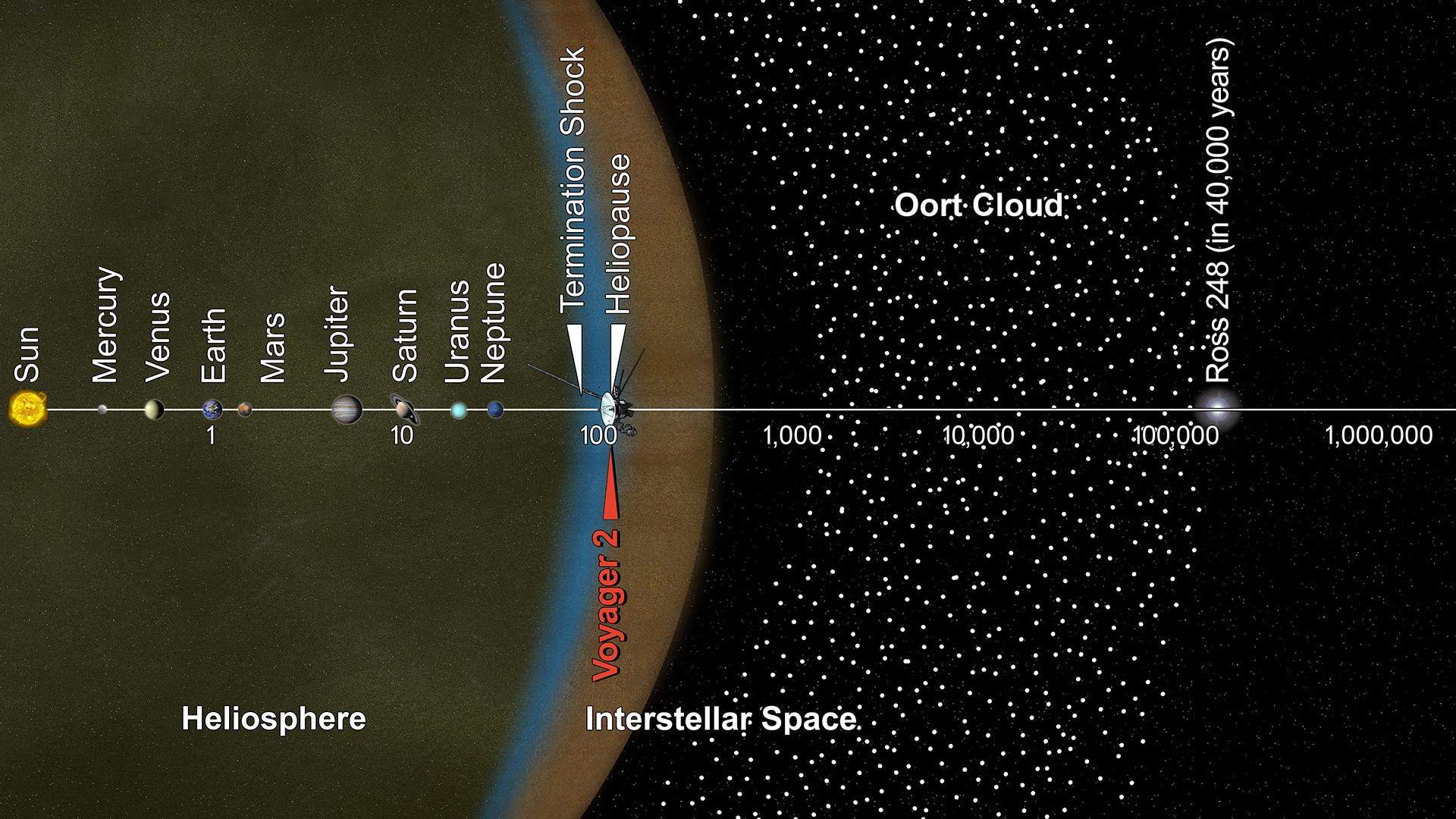
# Deep Space Telemetry: Voyager 1
STATUS: INTERSTELLAR
NASA’s Voyager 1 probe has officially established a new benchmark for human-engineered reach. According to NASA Breaking News, the venerable explorer has reached a distance of one light-day from Earth. This metric indicates that signals traveling at the speed of light—approximately 300,000 kilometers per second—now require a full 24 hours to bridge the void between the spacecraft and the Deep Space Network.
Tactical Milestone
Launched in 1977, the craft has exceeded all initial mission parameters. It remains the furthest human-made object in existence. Reaching the one light-day threshold is more than a symbolic achievement; it underscores the extreme operational latency faced by mission controllers. Any command sent from Earth now takes 24 hours to reach the probe's aging systems, with another 24 hours required to confirm execution via return telemetry.
Operational Reality
Despite its age and the harsh environment of interstellar space, Voyager 1 continues to relay data regarding the plasma and magnetic fields outside our solar system’s heliosphere. NASA is currently inviting the public and media to engage with the technical details of this achievement through a series of "One-Light Day" activities, highlighting the persistent engineering required to maintain communication over such staggering distances.
As the probe pushes further into the cosmic dark, it serves as a silent witness to the endurance of 20th-century computing and the scale of the vacuum. The mission remains the primary data source for the frontier where the Sun's influence finally yields to the interstellar medium.