US DATA HYPER-LANE: FCC VOTE TARGETS LICENSING ASSEMBLY LINE
The Federal Communications Commission prepares to vote on the Space Modernization Order, a regulatory overhaul designed to shift satellite licensing from years to weeks.
SYSTEM_UPDATE: REGULATORY_OVERHAUL
The Federal Communications Commission (FCC) is scheduled to vote on July 22 on a fundamental restructuring of its satellite application protocols. According to SpaceNews, the proposed "Space Modernization Order" seeks to replace decades-old Part 25 regulations with a new Part 100 framework, effectively creating a high-velocity "licensing assembly line" for orbital assets.
STRATEGIC OBJECTIVES
The reform aims to compress review timelines from years down to weeks or months. Key changes include:
Administrative Decoupling: Expanding the range of minor license modifications that no longer require prior agency authorization.
Fast-Track Notice: Reducing the standard public notice window for license requests from 30 days to 15 days.
* Safety Protocols: Mandating that operators share satellite tracking data with approved Space Situational Awareness (SSA) providers to mitigate collision risks in increasingly congested Low Earth Orbit (LEO) corridors.
SECTOR IMPACT
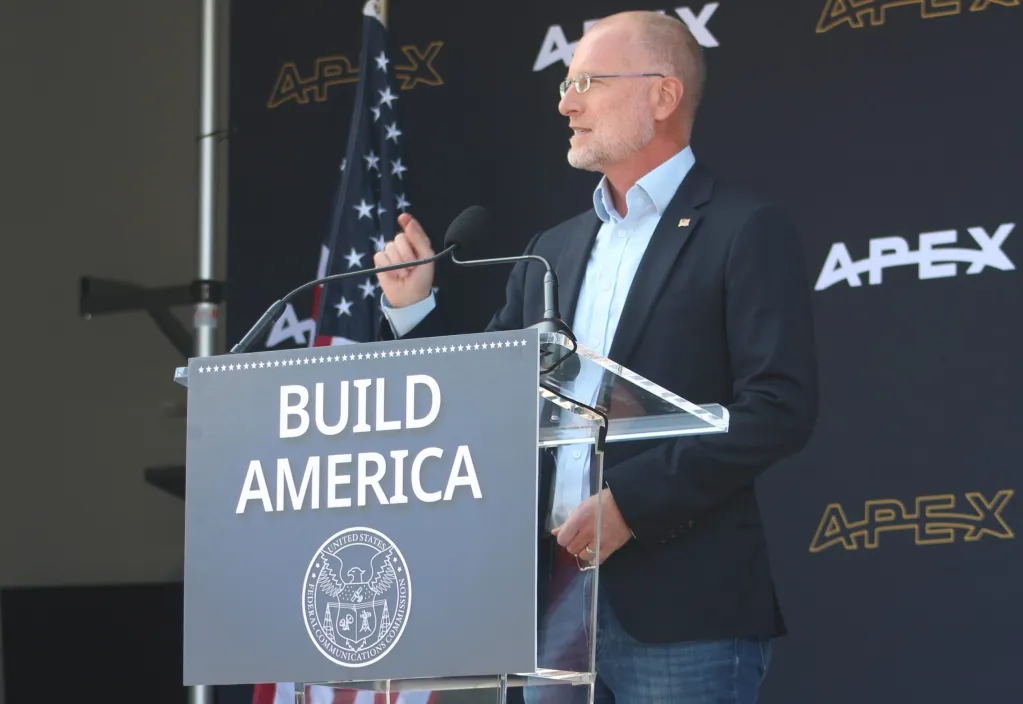
FCC Chairman Brendan Carr framed the move as essential for "Space Race 2.0," emphasizing that the US must shift from bespoke, artisanal reviews to objective, predictable processes to maintain its commercial edge. However, the order contains a specific exclusion: pending mega-constellation applications filed earlier this year—specifically SpaceX’s request for up to one million satellites—will not be grandfathered into these expedited timelines.
SPECTRUM ALLOCATION
Beyond licensing, the July 22 session will address the auction of 160 megahertz of upper C-band spectrum (3.98-4.14 GHz). This move, which impacts frequency currently utilized by Luxembourg-based operator SES, represents the first major commercial spectrum auction in five years. While intended to boost terrestrial 5G capacity, the auction follows recent aggressive spectrum acquisition strategies by various actors, including SpaceX as it builds out direct-to-smartphone capabilities.