ULA names Peller as new CEO
United Launch Alliance has named Mark Peller, a longtime manager and executive at the company, as its new chief executive. The post ULA names Peller as new CEO appeared first on SpaceNews.

Home / ULA names Peller as new CEO
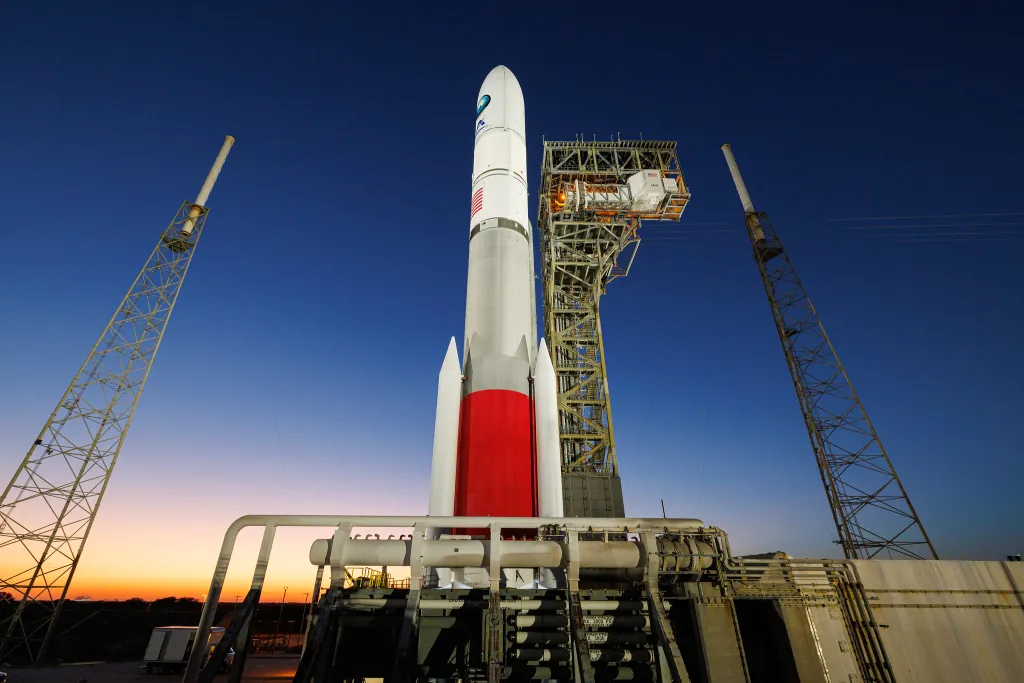
A United Launch Alliance (ULA) Vulcan rocket sits on Space Launch Complex 41 (SLC-41) at Cape Canaveral ahead of the launch of the USSF-87 national security mission. Credit: United Launch Alliance
WASHINGTON — United Launch Alliance has named Mark Peller, a longtime manager and executive at the company, as its new chief executive.
ULA announced Aug. 17 that it promoted Peller to president and chief executive, effective immediately. He had been chief operating officer of the company, a joint venture of Boeing and Lockheed Martin.
He succeeds John Elbon, who had been interim chief executive since December. Elbon had planned to retire from the company after eight years as chief operating officer, with Peller replacing him, but was named interim chief executive when longtime CEO Tory Bruno abruptly left the company. Several days later, Blue Origin announced it hired Bruno as its new president of national security.
ULA selected Peller to be chief executive after a “months-long process” that considered both internal and external candidates, said Kay Sears, a Boeing executive who serves on the ULA board, in a statement. “Mark’s background, coupled with his extensive knowledge of both ULA’s business and technical offerings, makes him the best candidate to fill the CEO position,” she said.
!Mark PellerMark Peller, president and CEO of ULA. Credit: ULA
Peller has been with ULA and related companies for more than 35 years. He joined Rockwell International in 1990 as a propulsion engineer working on the space shuttle program. Boeing acquired Rockwell’s space business in 1996 and, a year later, Peller joined Boeing’s Delta launch vehicle programs.
After Boeing and Lockheed Martin merged their launch vehicle programs into ULA in 2006, he became chief engineer for the Delta 2 and Delta 4 vehicles. He was serving as senior vice president for Vulcan and advanced programs at ULA when he was named chief operating officer last December.
“I am honored to take on this role leading a truly amazing team of people and appreciate the confidence the board has in me,” Peller said in a statement. “ULA has a tremendous history of launching some of the nation’s most important national security and exploration missions, and the future is limitless with the new capabilities and performance of our Vulcan rocket.”
The Vulcan rocket, though, is currently a major challenge for ULA. At a February briefing, Peller said the company was planning 16 to 18 Vulcan launches in 2026. However, the first of those launches, on a Space Force mission, suffered a performance anomaly in one of its four solid rocket boosters. The rocket was able to successfully complete the mission but has not flown since.
ULA has performed three Atlas 5 launches this year, most recently July 2, all for Amazon Leo. However, the only remaining Atlas 5 vehicles are reserved for Boeing’s CST-100 Starliner commercial crew vehicle.
During a July 21 earnings call, Northrop Grumman, which produces Vulcan’s solid rocket boosters, said it had taken “corrective actions” to address the problem seen in the February launch, but added that the redesigned motors may not begin deliveries until the end of the year.
The Vulcan hiatus has created financial pressures at ULA. Lockheed Martin said in a July 23 regulatory filing that the grounding was “negatively affecting ULA’s financial condition” and that it agreed to guarantee $500 million in loans to ULA. Boeing said in a separate filing July 28 that it made a similar guarantee to ULA.
“ULA’s financial position has been impacted due to the performance challenges associated with the anomaly with the solid rocket booster nozzle experienced on two of the Vulcan launches,” the company said in a July 24 statement, referring to both the February launch and a similar issue seen on Vulcan’s second launch in October 2024.
Even without the solid rocket motor issue, Vulcan might still be grounded. The rocket’s first stage uses BE-4 engines from Blue Origin, which also power that company’s New Glenn rocket.
Blue Origin said Aug. 5 that it had linked a May 28 explosion that destroyed a New Glenn rocket on the pad during a static-fire test to a liquid oxygen valve in the BE-4 engine. It said it was making “small modifications” to the valve that could be used on engines already produced.
ULA said that with Peller now in place as chief executive, Elbon will retire from the company at the end of the year, concluding a 45-year career in the industry.
“We appreciate John’s commitment to ULA and postponing his planned retirement last year to stay on as interim CEO to provide the company a smooth transition and time to conduct a thorough search and selection process for his successor as president and CEO,” said Robert Lightfoot, president of Lockheed Martin Space and chair of ULA’s board.
_Related_

Jeff Foust
Jeff Foust writes about space policy, commercial space, and related topics for SpaceNews.
He earned a Ph.D. in planetary sciences from the Massachusetts Institute of Technology and a bachelor’s degree with honors in geophysics and planetary science... More by Jeff Foust
Sign in or register
Close
Continue with Google
Or
Enter the code sent to your email
Email address
Enter your password
Sign in by entering the code we sent to , or clicking the magic link in the email.
ContinueResend codeEmail me a one-time code instead Forgot password Go back
Continue Set a password (optional)
We'll send a verification code to %EMAIL%.
Send code
Skip for now
To continue reading this article:
Register now to get
2 more free articles this month.
You’ll also receive our weekly Editor’s Choice, SpaceNews This Week and Opinions newsletters. Opt-out at any time.
Sign up
Sign in to an existing account
Get unlimited access to SpaceNews.com, the SpaceNews app and our digital monthly magazine for less than $5 per week.
$250/year
Subscribe now
_Cancel anytime. Sales tax may apply. No refunds._ _Terms and conditions apply._
Link
Copy link
Digital All-Access Subscription (Monthly) $25.00 / monthDigital All-Access Subscription (Quarterly) $70.00 every 3 monthsDigital All-Access Subscription (Yearly) $250 / yearDigital All-Access Subscription (2 Years) $450 every 2 yearsPurchase
Sign in to an existing account Cancel