TRUE ANOMALY VALIDATES SPACE COMBAT CAPABILITY
True Anomaly’s Jackal spacecraft successfully tracked and imaged an evading target in orbit, marking a significant milestone for the U.S. Space Force’s VICTUS HAZE mission.
ORBITAL PURSUIT VALIDATED
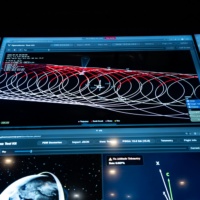
True Anomaly has confirmed the successful execution of an in-space pursuit involving an evading target, a critical milestone for the U.S. Space Force’s tactical responsive space mission, VICTUS HAZE. According to Payload, the sortie featured the company’s Jackal spacecraft stalking a Puma satellite—built by Rocket Lab—which actively attempted to maneuver away from its pursuer.
MISSION PARAMETERS
The exercise, initiated on July 14, represents an escalation from previous tests where the target remained cooperative. For this engagement, the Jackal was required to track the Puma through non-cooperative maneuvers, replan its trajectory in real-time, and re-engage. According to True Anomaly COO Sarah Walter, the mission validated several core capabilities:
- Rapid Planning: The team produced a mission plan within 30 minutes of tasking.
- Autonomous Tracking: Jackal utilized its 'Multi-Object Detection and Tracking' algorithm to estimate the target's orbit using onboard sensors.
- Close Proximity: The interceptor closed to within 10 km of the Puma, meeting the 10-20 km guidance window.
- Multi-Aspect Imaging: Jackal successfully executed spiral maneuvers to capture imagery from multiple angles.
HARDWARE VS. OPERATOR
Despite thermal anomalies early in the mission, operators utilized the Mosaic command-and-control software to adapt. Walter likened the relationship between the software and the human operators to that of a Formula One driver and their vehicle. While the Jackal achieved its primary objectives, True Anomaly CEO Even Rogers noted that the vehicle retains significant fuel reserves for future missions involving increased autonomy and innovative tactics. The successful demonstration confirms the viability of autonomous orbital vehicles (AOVs) for high-stakes space domain awareness.