Transporter-18: Prototyping the Orbital Data Center Ecosystem
SpaceX’s latest rideshare mission deployed key technologies for orbital computing, including laser power transmission, AI chip endurance tests by Google, and spacecraft-to-spacecraft energy beaming.
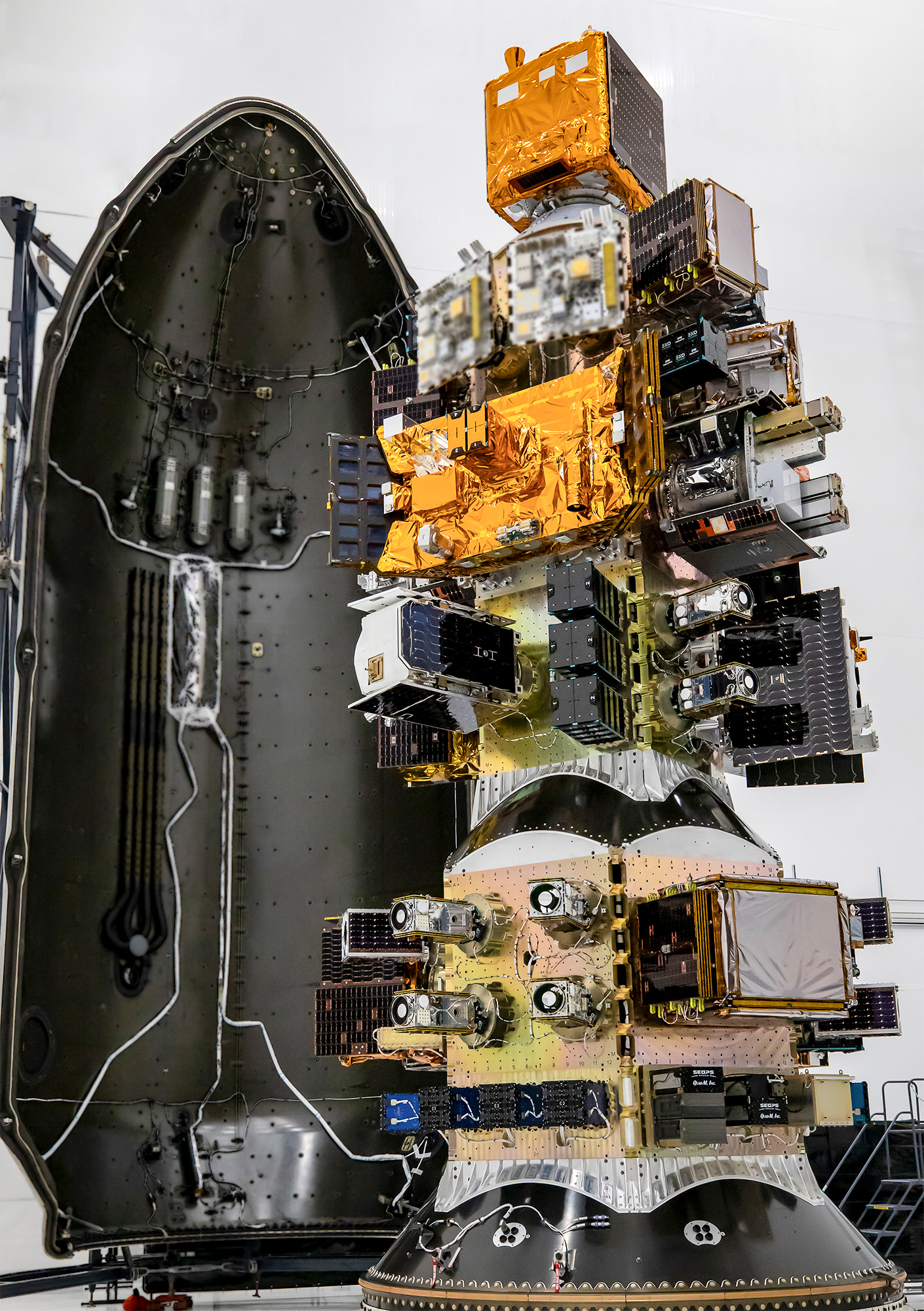
Orbital Infrastructure Nodes Deployed
SpaceX’s Transporter-18 mission, launched from Vandenberg, has delivered a specific set of payloads designed to solve the three-body problem of orbital computing: power, processing, and connectivity. According to Payload, three primary ventures are now testing the hardware required to move data centers off-planet.
The Combatants
Cowboy Space (formerly Aetherflux) is utilizing its Reason-1 mission to validate commercial-grade laser power transmission. The objective is to beam 30–100 W via infrared laser to a ground facility. This optical link serves as a precursor to Reason-2, a GPU-equipped satellite slated for 2027 that will pivot from power beaming to high-speed data transmission.
Google’s Project Suncatcher represents a significant entry by Big Tech. Its fridge-sized MVP satellite, built with Planet Labs, is stress-testing four Trillium TPUs using solar power. While ground tests suggest these chips can survive five years of radiation, operational thermal management remains a critical hurdle; the hardware must currently power down every 20 minutes to prevent overheating. Google’s long-term roadmap envisions clusters of 80+ satellites linked by lasers to form distributed orbital server racks.
Star Catcher rounds out the architecture with its Protostar demo. The mission aims to beam power between two spacecraft, targeting orbital compute startups like Starcloud and Aethero as prospective clients.
Strategic Outlook
The shift from theoretical to empirical testing marks a transition in the sector. If launch costs reach the $200/kg threshold—potentially via high-cadence heavy-lift vehicles—orbital power costs may achieve parity with terrestrial data center utility rates by the mid-2030s.