Tianwen-2 Intercepts Asteroid Kamoʻoalewa: First Imagery Downlink
China’s Tianwen-2 spacecraft has arrived at the near-Earth asteroid Kamoʻoalewa, initiating a high-stakes sample return mission that challenges previous lunar-origin theories.
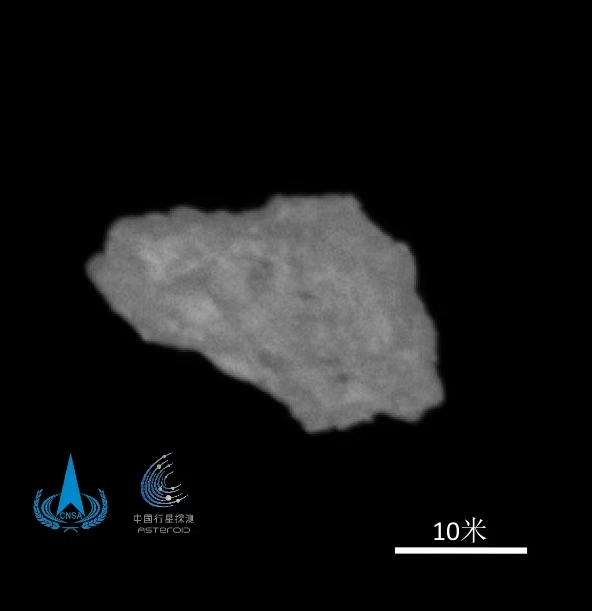
Mission Status: Arrival Confirmed
China’s Tianwen-2 spacecraft has successfully intercepted the near-Earth asteroid 469219 Kamoʻoalewa (2016 HO3). According to SpaceNews, the China National Space Administration (CNSA) confirmed arrival at a 20-kilometer station point on July 6, following a 400-day transit covering approximately 1 billion kilometers.
Primary Observations
Initial imagery reveals an elongated rocky body significantly smaller than ground-based estimates. While previous data suggested a diameter between 40 and 100 meters, the new downlink indicates a size of roughly 20 meters. This aligns with recent James Webb Space Telescope observations. Mikael Granvik of the University of Helsinki noted that the asteroid's high geometric albedo likely excludes the hypothesis that Kamoʻoalewa is lunar ejecta, pointing instead to a silicate-heavy (E-type) asteroidal origin.
Operational Parameters
The CNSA maintained radio silence during the final approach, though European tracking by AMSAT-DL monitored the probe's engine burns as it closed from 30,000 km in early June to its current proximity.
Tianwen-2 is equipped with 11 science payloads, including the Italian-made DIANA dust analyzer. To ensure success at this unknown target, the probe uses a triple-redundant sampling architecture:
Hovering sampling
Touch-and-go
* Anchoring and attachment
Next Phases
Current proximity operations focus on global mapping and site selection. The probe is scheduled to depart in April 2027, with a sample return capsule slated for Earth reentry in November 2027. Following the Kamoʻoalewa phase, the spacecraft will pivot toward comet 311P/PANSTARRS, continuing China’s aggressive expansion into deep-space exploration.