THERMAL ANOMALY: MAPPING THE EL NIÑO TEMPORAL SHIFT
Satellite data analysis reveals the evolving dynamics of El Niño events, highlighting significant shifts in global climate patterns and planetary sea surface temperatures.
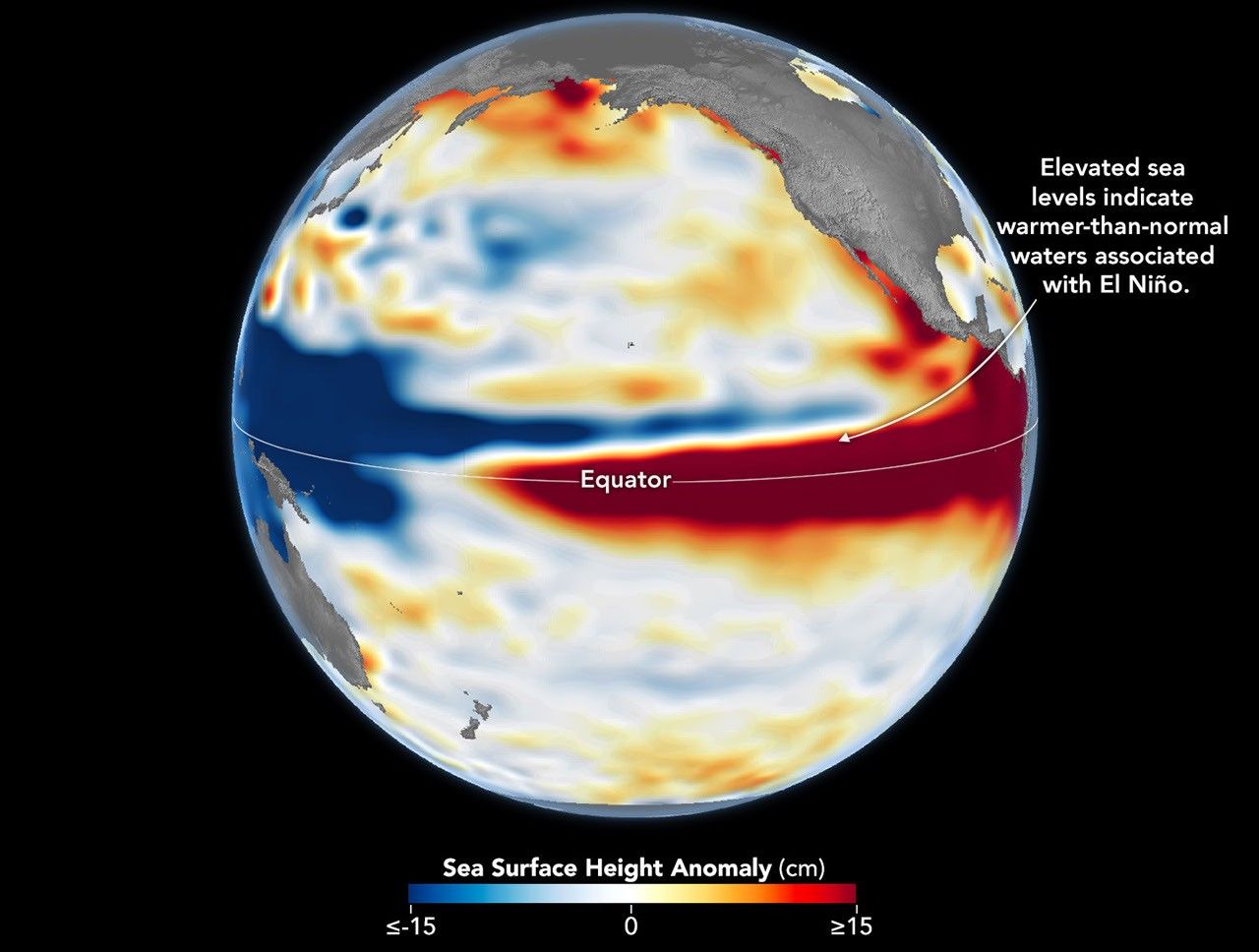
DATA OVERVIEW: PLANETARY THERMAL SHIFTS
Recent telemetry and longitudinal analysis from orbital assets provide a comparative framework for understanding the El Niño phenomenon. According to NASA Breaking News, the agency is utilizing decades of satellite observation to contrast historical atmospheric events with contemporary data, specifically focusing on how these thermal cycles manifest under modern climate conditions.
ORBITAL ANALYSIS
El Niño events represent a significant disruption in the Earth's climate system, characterized by the periodic warming of sea surface temperatures in the central and eastern Pacific Ocean. By deploying advanced Earth observation sensors, researchers can now track the precise evolution of these anomalies. The data highlights a stark contrast between historical baselines and current intensity levels, offering a granular look at the energy exchange between the oceans and the atmosphere.
SYSTEMIC IMPACTS
This monitoring is not merely a scientific exercise; it is a critical component of planetary defense against extreme weather. NASA’s Earth Observatory utilizes these datasets to forecast disruptions in global precipitation and temperature patterns. The transition from historical "Then" to modern "Now" scenarios illustrates a biosphere under increasing thermal stress. As satellite instrumentation like the Roman Space Telescope and the Artemis program advance, the integration of deep-space tech with Earth-centric observation becomes a core strategic priority for space agencies worldwide.
CONCLUSION
The ability to map these shifts ensures higher fidelity in climate modeling. Continuous orbital surveillance remains the primary method for quantifying the global reach of these cycles as they reshape the terrestrial environment.