Tactical Mobility for Cubesats: Parabilis Validates DOTS Propulsion
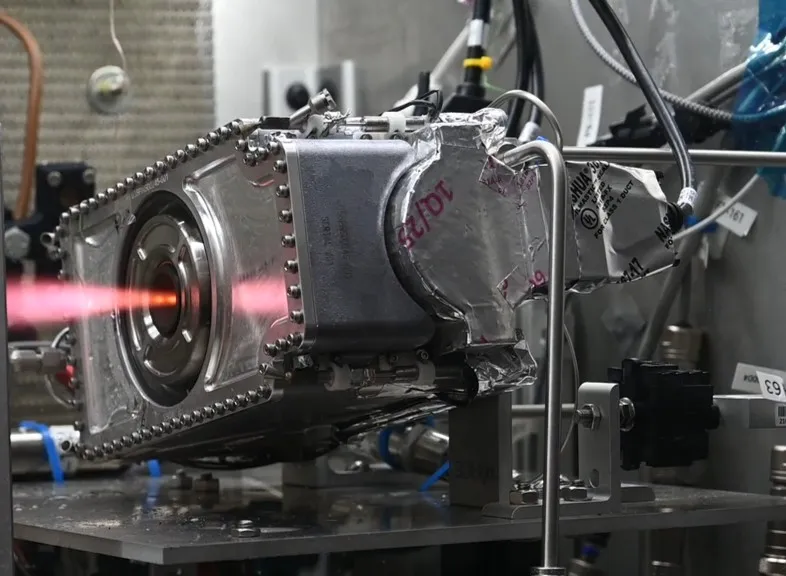
California-based Parabilis Space Technologies has successfully completed hot-fire testing of its Dense Orbital Transfer System (DOTS), a hybrid propulsion module designed to give small satellites active maneuvering capabilities.
# PROPULSION LOG: DOTS SYSTEM STATUS
Active maneuvers for small-scale orbital assets are moving from theory to hardware realization. According to SpaceNews, California-based startup Parabilis Space Technologies has successfully completed hot-fire testing for its Dense Orbital Transfer System (DOTS). The 2U propulsion module, roughly the dimensions of a household toaster, provides a high-thrust solution for cubesats that traditionally drift helplessly after deployment.
Technical Specifications
DOTS utilizes a hybrid engine architecture, fusing solid fuel with a liquid oxidizer. This design aims to balance the high-density storage benefits of solid propellants with the precision throttling and restartability of liquid systems. Crucially, the system features "cold start" capability, bypassing the power-heavy pre-heating cycles required by many electric or chemical thrusters. This allows for instantaneous response to orbital threats or mission changes.
Strategic Utility
Space Systems Command (SSC) is monitoring the development, viewing the technology as a method to modernize military small-sat utility. Without propulsion, small satellites are vulnerable to orbital decay and debris impacts. Integrated dots modules enable:
- Collision Avoidance: Active steering to dodge debris.
- VLEO Operations: Sustaining flight in Very Low Earth Orbit despite atmospheric drag.
- Dynamic Tasking: Rapid formation flying and orbital repositioning.
Deployment Window
Following the successful ground testing, Parabilis CEO Enrico Attanasio stated the system marks a significant performance leap for the sector. The company is currently targeting a flight demonstration. If a partnership with government or commercial industry is finalized, the hardware could be spacebound in less than twelve months.