Swiss Startup Stellar Alpina Secures Pre-Seed Capital for RDRE Development
Stellar Alpina has raised $4.5M to commercialize Rotating Detonation Rocket Engines, promising a leap in thermodynamic efficiency for in-space mobility by 2028.
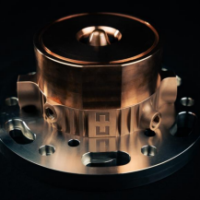
Switzerland-based propulsion startup Stellar Alpina has secured CHF 3.5 million ($4.5 million) in pre-seed funding to accelerate the development of Rotating Detonation Rocket Engines (RDRE). According to Payload, the round was led by Founderful, with participation from LP&E.
RDRE technology offers a radical departure from traditional isobaric combustion. By utilizing a continuous detonation wave that travels around a circular channel, these engines achieve higher thermodynamic efficiency and superior thrust-to-weight ratios in a more compact footprint. While theoretically superior for in-space maneuvering, the technology remains difficult to scale for commercial mission profiles.
Stellar Alpina’s trajectory is characterized by rapid iteration. Originating from the Academic Spaceflight Initiative, the founding team designed and hot-fired their first RDRE in just 82 days—surpassing their internal 100-day target. Co-founder Victor Elliesen indicated that the new capital will fund a high-class test stand and an expanded workforce of over a dozen specialists. The roadmap includes a rigorous testing cadence, with the team aiming to fire new engine configurations every two weeks.
The strategic objective is a flight-ready RDRE by 2028. The company is currently engaging potential customers to identify specific high-maneuver requirements for orbital assets.
Though global competition is intensifying—with JAXA demonstrating in-space firing in 2021 and U.S. firms like Venus Aerospace and Astrobotic achieving recent milestones—Stellar Alpina aims to secure European leadership in the field. "Who says the first RDRE can't come from Europe?" Elliesen told Payload, signaling a drive to move the technology beyond Low Earth Orbit (LEO) as demand for advanced mobility scales.