Sweden’s Mesospheric Glow: Noctilucent Clouds Observed
New imaging data from October 2026 highlights noctilucent cloud formations over Sweden, marking a significant mesospheric event captured by global skywatching networks.
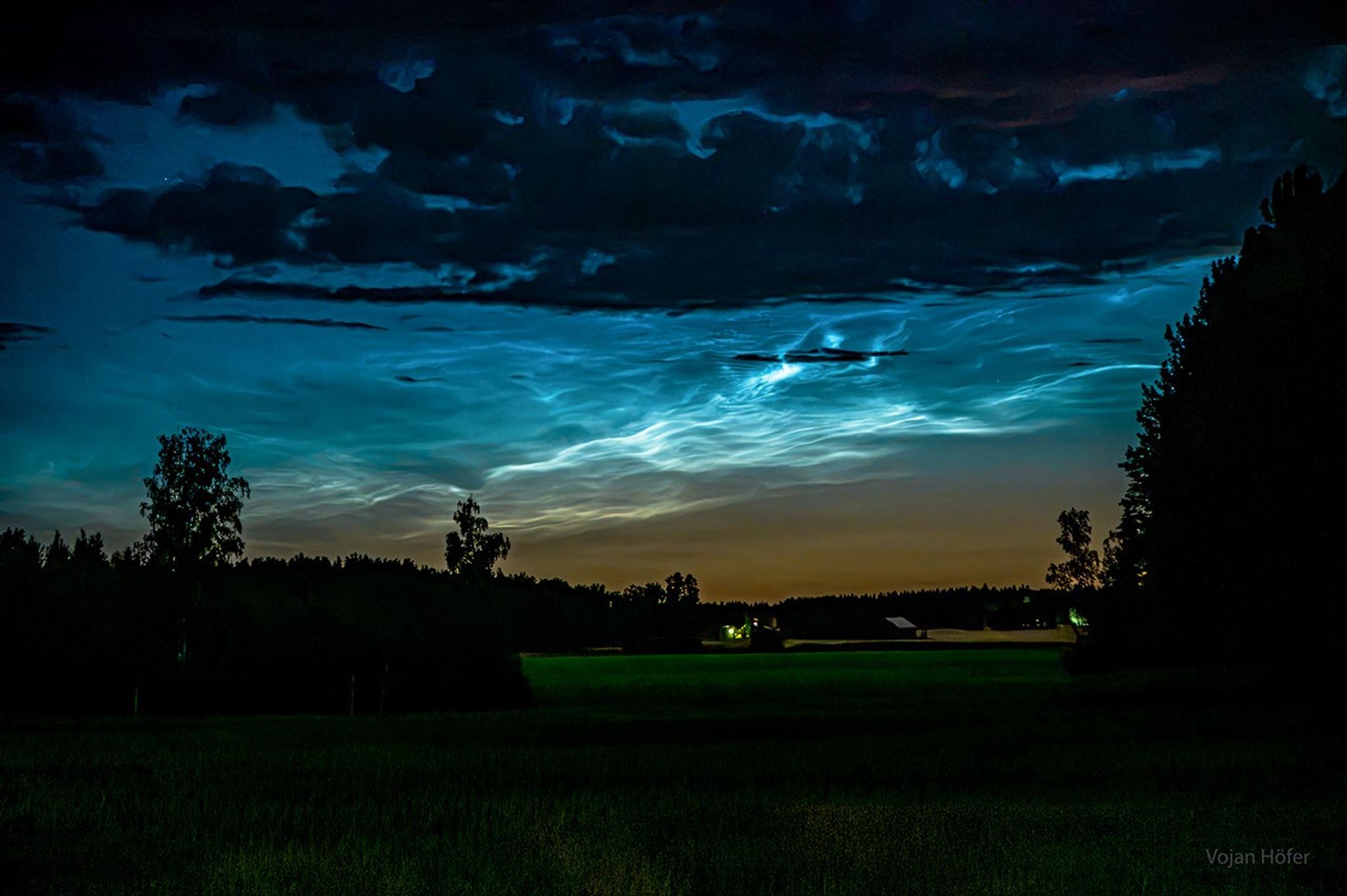
Mesospheric Anomalies Detected
Recent data transmissions from NASA Breaking News confirm the documentation of noctilucent clouds over Swedish territory as of October 27, 2026. These high-altitude formations, also identified as night-shining clouds, represent a significant atmospheric phenomenon occurring at the edge of space.
Atmospheric Composition
Unlike standard meteorological structures, noctilucent clouds reside in the mesosphere—approximately 80 kilometers above the Earth's surface. According to NASA, these clouds are composed of ice crystals that form on microscopic dust particles, likely originating from meteoric disintegration. Their visibility is restricted to specific solar geometries, where the sun remains below the horizon but still illuminates the crystals from below, casting a distinct electric-blue glow against the twilight sky.
Orbital Context and Mission Data
The observation aligns with broader 2026 skywatching trends, including the recent Orionid meteor shower and the final commissioning phases of the Roman Space Telescope. As NASA's Psyche spacecraft continues its transit toward the asteroid belt, ground-based observations in Northern Europe remain critical for monitoring the chemical and physical interactions within the upper atmosphere.
Analysts at spacechannel.eu note that while these events are seasonal, the intensity recorded over Sweden indicates a high concentration of mesospheric water vapor and low temperatures, essential for ice crystallization at the space-gate interface. Systematic tracking of these phenomena provides vital telemetry for understanding climate dynamics and the debris-loading of the upper atmosphere.