Sunset for a Workhorse: Atlas 5 Completes Final Satellite Mission
United Launch Alliance successfully deployed 29 Amazon Leo satellites, marking the final satellite delivery for the veteran Atlas 5 launch vehicle ahead of its transition to Boeing Starliner duties.
Mission Status: Successful
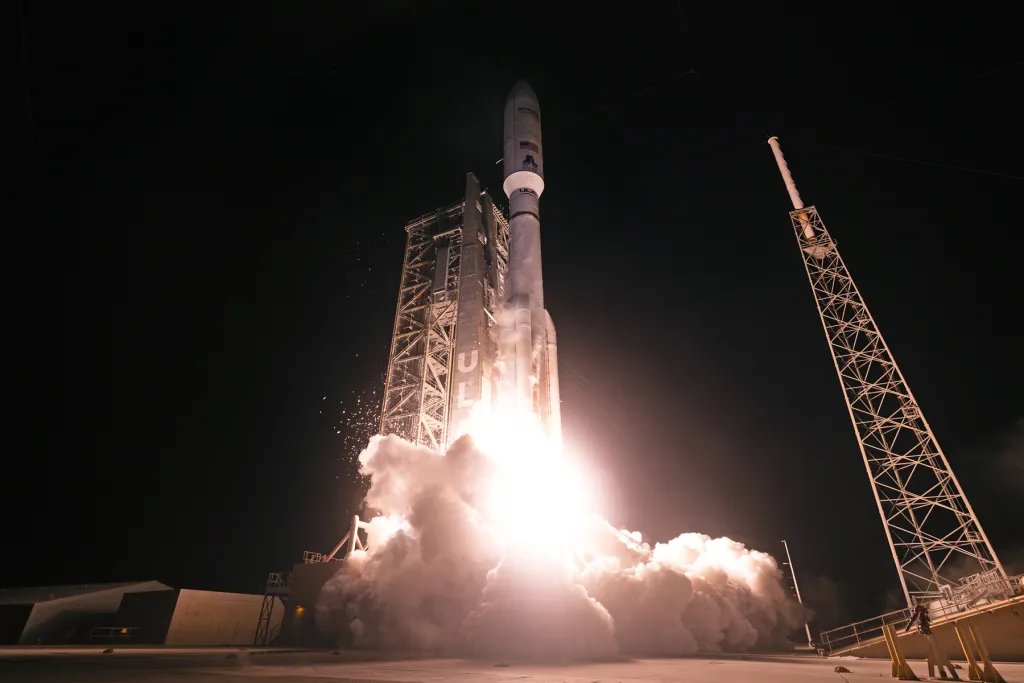
On July 2 at 12:30 a.m. Eastern, United Launch Alliance (ULA) successfully executed the final satellite-payload mission for the Atlas 5. The launch initiated from Cape Canaveral Space Force Station, deploying 29 Amazon Leo broadband satellites with high precision. Deployment sequence began 21 minutes post-liftoff and concluded within 16 minutes.
Constellation Growth
According to SpaceNews, this mission concludes a block of nine Atlas 5 launches purchased by Amazon in 2021. With this delivery, the Amazon Leo constellation (formerly Project Kuiper) now exceeds 390 units in orbit. Chris Weber, Amazon Leo Vice President, indicated that while altitude raising remains in progress, current numbers are sufficient to initiate initial service programs later this year.
Vehicle Transition
The Atlas 5 551 variant has served as the backbone for the early deployment phase, maintaining a 100% success rate across eight operational missions. Amazon is now shifting its logistical focus to ULA’s Vulcan Centaur, having secured 38 launches for the next-generation vehicle. However, the Vulcan transition follows an anomaly during a February Space Force mission, and ULA has yet to confirm a return-to-flight schedule. To maintain cadence, Amazon continues to utilize Arianespace’s Ariane 6 and SpaceX’s Falcon 9.
Legacy Data
This launch represents the 110th flight for the Atlas 5 since its 2002 debut. Throughout its career, the vehicle achieved a nearly flawless record; its only partial failure occurred in 2007 during an NRO mission. The remaining six Atlas 5 chassis in inventory are strictly sequestered for Boeing’s CST-100 Starliner program. With no further satellite manifest entries, the Atlas name—a lineage dating to the dawn of the Space Age—prepares for its final decommissioning after the Starliner sorties.