Subterranean Frontiers: ESA Pioneers Lunar-Analogue Cave Exploration
ESA is exploring subterranean river systems and lunar-analogue caves to prepare astronauts and robotic systems for future off-world habitats and resource management.
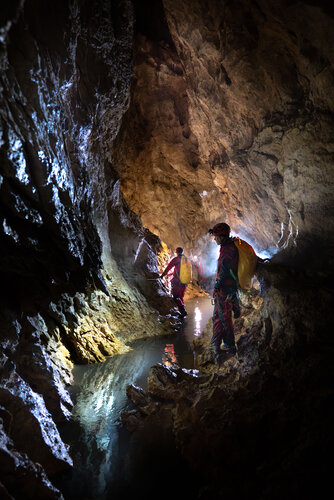
Subterranean Protocol
Space exploration is descending into the dark. According to ESA, the agency is intensifying its research into subterranean environments as critical analogues for lunar and Martian lava tubes. These underground networks offer natural shielding from solar radiation, micrometeoroids, and extreme temperature fluctuations—making them prime candidates for long-term human habitation beyond Earth.
The Sub-Surface Mission
Recent operations focus on navigating underground rivers and cave systems, testing both human endurance and robotic autonomy. These environments act as high-fidelity proxies for the rugged terrain astronauts will encounter on the Moon. ESA reports that navigating these lightless, confined spaces requires advanced 3D mapping technologies and autonomous sensor arrays that do not rely on GPS or surface-linked communications.
Strategic Objectives
- Habitat Simulation: Cave complexes provide a stable thermal environment similar to what is expected inside lunar basalt tubes.
- Resource Identification: Exploring underground water systems on Earth assists in developing methodologies for detecting sub-surface ice on other planetary bodies.
- Technology Stress-Testing: Equipment specifically designed for low-light and high-humidity environments undergoes rigorous validation to ensure reliability during off-world deployment.
By leveraging the expertise of its 23 Member States, ESA aims to ensure Europe remains at the forefront of the "space under." This subterranean strategy is not merely about exploration, but about securing the operational blueprint for the first permanent colonies on the Moon and Mars.