Structural Integrity: NASA Analyzes Complex Modes in Lightly Damped Systems
A technical bulletin from NASA Engineering and Safety Center explores the interaction of complex modes in lightly damped structural systems, providing critical insights for aerospace stability.
Technical Bulletin: TB 26-08
According to NASA Breaking News, the NASA Engineering and Safety Center (NESC) has released a technical assessment focusing on complex mode interactions within lightly damped structural systems. In the vacuum of aerospace engineering, structural stability is not merely a matter of static strength but a dynamic puzzle involving how vibrations propagate and dissipate across a frame.
The Two-Mode Perspective
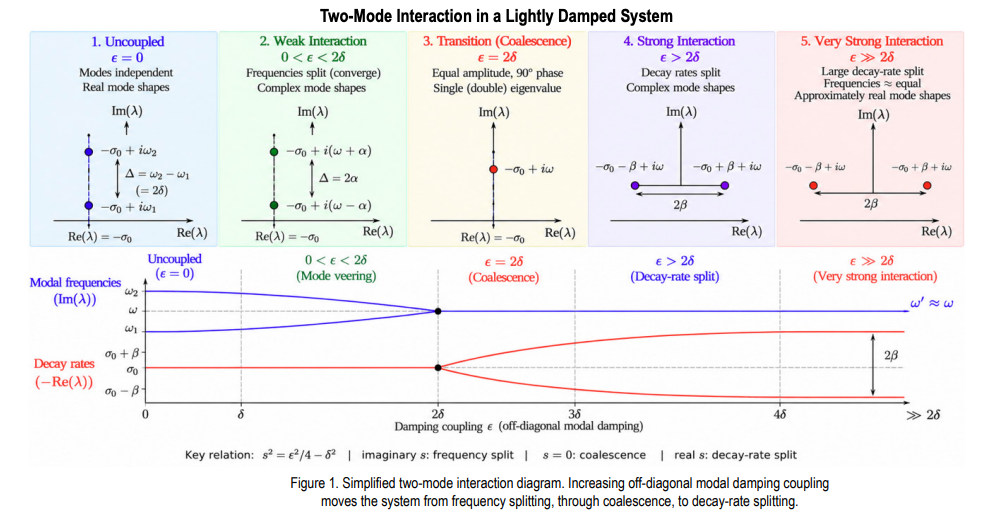
The report, designated TB 26-08, investigates the phenomenon where structural modes—naturally occurring patterns of vibration—interact in ways that traditional linear models may fail to predict. In systems with minimal damping, these interactions can lead to "complex modes," where the phase of motion varies across different points of the structure. This deviates from simple "normal modes" where all points reach their maximum displacement simultaneously.
Engineering Implications
For high-performance hardware, such as the Artemis launch architecture or the James Webb Space Telescope, understanding these interactions is vital for mission success. When two modes have frequencies in close proximity, a coupling effect occurs. If not accounted for during the design and testing phases, this can lead to unexpected resonance or structural fatigue. The NESC bulletin provides a refined analytical framework for identifying these interactions during simulation, ensuring that the next generation of spacecraft can withstand the rigorous acoustic and vibrational loads of ascent and orbital maneuvering.
By isolating the two-mode interaction perspective, engineers can better calibrate the damping mechanisms required to stabilize sensitive instrumentation against parasitic vibrations.