Stellar Obscuration: Deep Space Analysis of LDN 1295
New observations of Lynds Dark Nebula 1295, commonly known as the Giraffe Nebula, provide high-resolution data on cosmic dust density and star-forming regions.
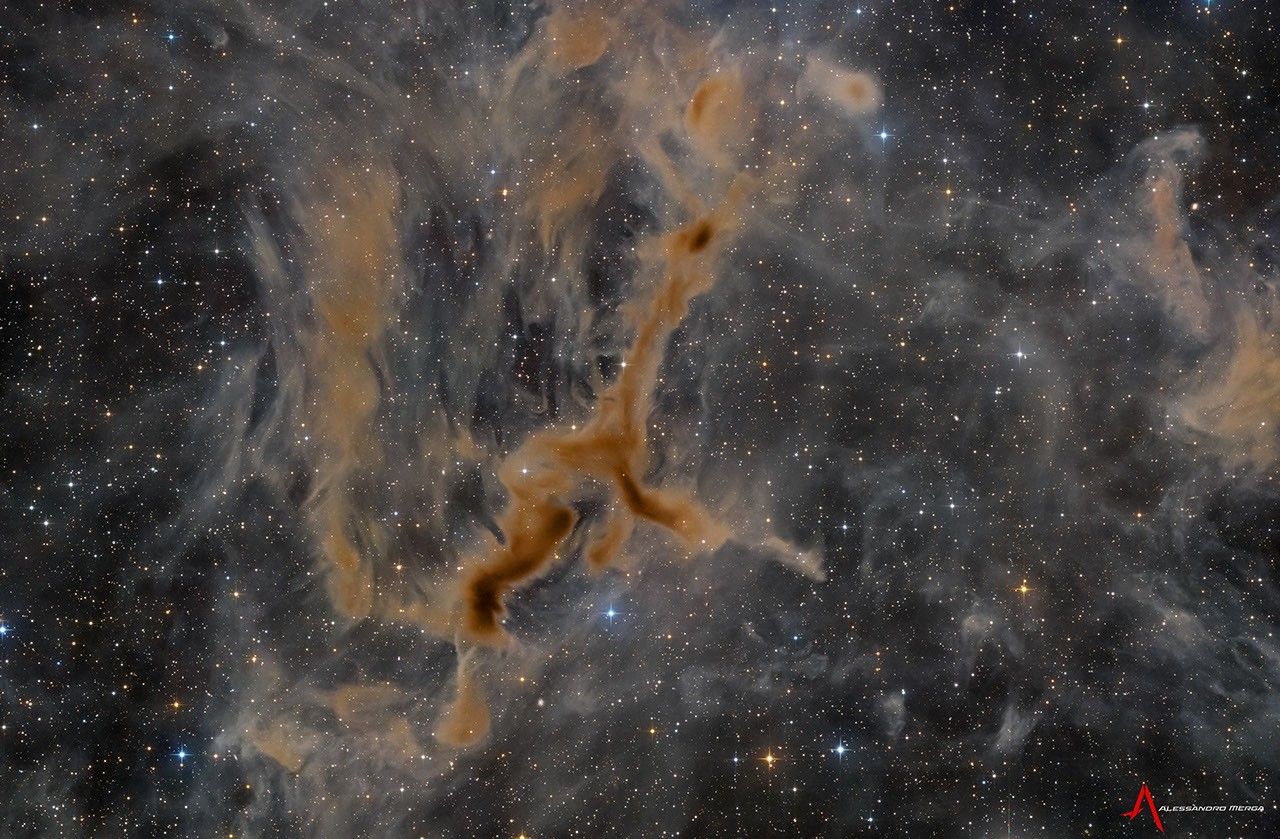
Technical Brief: The Giraffe Nebula
Deep-space observational data recently spotlighted LDN 1295, an expansive molecular cloud frequently referred to as the Giraffe Nebula. According to NASA Breaking News, this dark nebula represents a concentrated zone of cosmic dust and cold gas, functioning as a significant barrier to visible light spectrum observation in its sector of the sky.
Observational Mechanics
Dark nebulae like LDN 1295 do not emit light. Instead, they are identified through the occlusion of background stellar radiation. The high density of interstellar dust within these structures absorbs and scatters shorter wavelengths, leaving only faint, infrared-heavy signatures detectable by high-sensitivity sensors. These regions are primary sites for star formation, where gravitational collapse eventually ignites proto-stellar cores.
Mission Context
The reporting coincides with broader orbital intelligence updates, including the ongoing telemetry from the James Webb Space Telescope and Hubble. While NASA assets continue to track anomalies—such as the newly identified atmospheric decagon at Saturn’s south pole and the pre-launch integration of the Dragonfly mission for Titan—the analysis of LDN 1295 remains critical for mapping the Milky Way’s structural density. As the ESA and NASA collaborate on deep-field surveying, these dark clouds provide the essential contrast required to measure the true luminosity of the galactic background.