Stellar Nurseries and Lunar Impacts: A Deep-Space Intelligence Briefing
NASA visualizes the high-energy Cocoon Nebula wide field while confirming record-breaking planetary finds and a rare lunar cratering event.
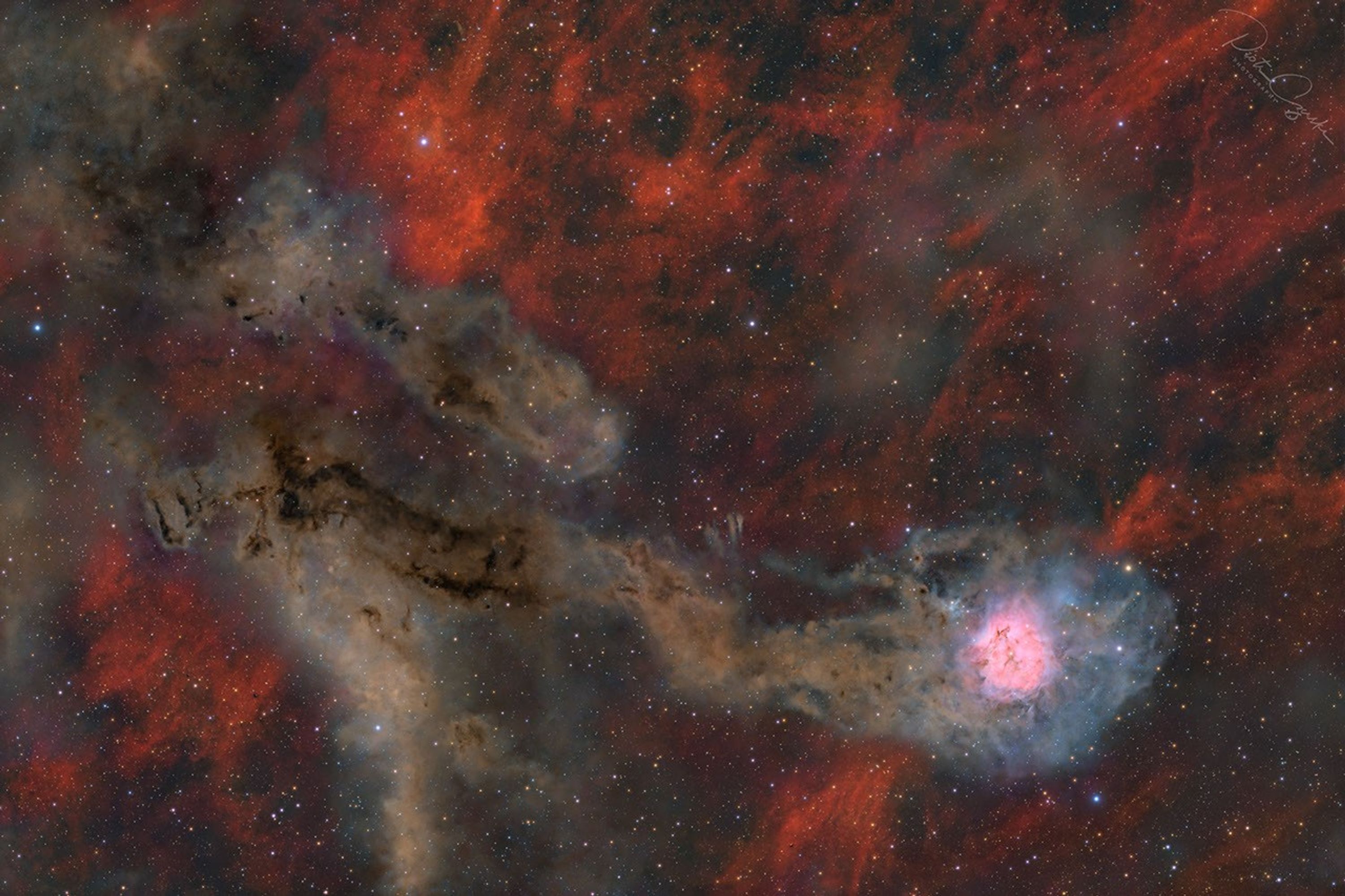
Deep Space Surveillance: IC 5146
Latest telemetry from deep-space imaging showcases the Cocoon Nebula (IC 5146) in a wide-field survey. According to NASA Breaking News, the data captures a highly active stellar nursery located approximately 4,000 light-years away in the constellation Cygnus. The region is characterized by a central cluster of young stars surrounded by a dense cloud of gas and dust, illuminating the intricate dynamics of star formation in our galactic neighborhood.
Planetary and Lunar Anomalies
Concurrent reports confirm two significant breakthroughs in celestial observation. Astrophysicists have identified what is now the youngest known world—a 'baby' planet that has officially shattered previous records for planetary infancy. This discovery provides critical data for refining models of orbital evolution and protoplanetary disk collapse.
Closer to home, the Lunar Reconnaissance Orbiter (LRO) has detected a 'once-in-a-century' impact crater on the Moon's surface. This fresh site provides a rare opportunity for geological analysis of sub-surface lunar materials recently unearthed by the kinetic energy of the impact.
Commercial Trajectory
In the logistics sector, NASA has finalized an agreement with SpaceX for three additional crewed rotations to the International Space Station (ISS). This move reinforces the reliance on commercial transit architectures to maintain orbital presence during the transition to the Artemis era. These missions ensure that critical microgravity research remains continuous through the latter half of the decade.