Stellar Alpina Targets Moon with Rotating Detonation Propulsion
Swiss startup Stellar Alpina has unveiled a roadmap for lunar landers and orbital transfer vehicles utilizing high-efficiency Rotating Detonation Rocket Engines (RDRE).
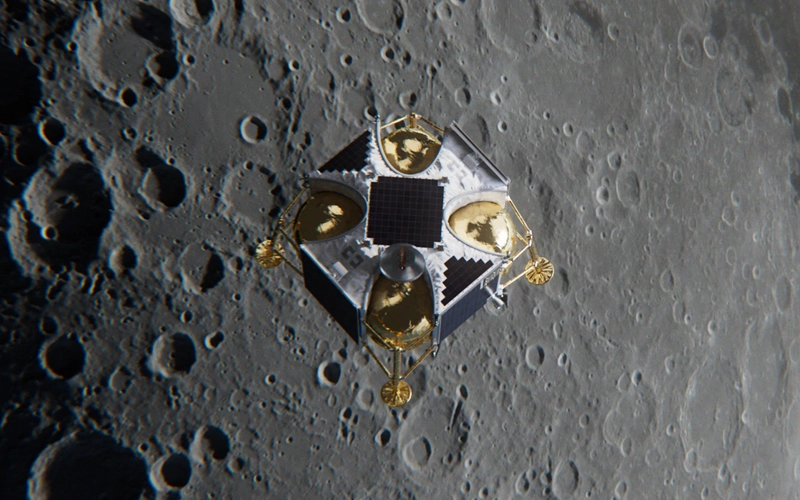
Propulsion Paradigm Shift
Swiss aerospace startup Stellar Alpina has officially entered the lunar logistics race. According to European Spaceflight, the firm is developing a suite of spacecraft—including a lunar lander and an Orbital Transfer Vehicle (OTV)—built around a core technological differentiator: the Rotating Detonation Rocket Engine (RDRE).
The RDRE Advantage
Unlike traditional rocket engines that rely on deflagration (subsonic combustion), RDREs utilize supersonic detonation waves that travel around a circular channel. This mechanism offers significantly higher thermodynamic efficiency, potentially reducing fuel mass requirements for deep-space maneuvers. For a lunar lander, this efficiency translates directly into increased payload capacity or extended mission duration.
Mission Architecture
The company’s roadmap focuses on two primary hardware assets:
1. Orbital Transfer Vehicle (OTV): Designed to ferry payloads between Earth orbits or toward cislunar space.
2. Lunar Lander: A descent vehicle optimized for the lunar surface, leveraging the compact power of the RDRE to manage the high delta-v requirements of soft landing.
By integrating this next-generation propulsion into a modular spacecraft architecture, Stellar Alpina aims to lower the cost barrier for European lunar exploration. While the technology remains in the high-stakes development phase, the successful deployment of a flight-ready RDRE would represent a significant leap in European propulsion capabilities, moving beyond the limitations of chemical combustion standards that have dominated the industry for decades.