Starship Flight 13: Technical Corrections and Functional Payloads
SpaceX marks July 16 for Starship Flight 13, targeting hardware reliability fixes and the first suborbital deployment of functional Starlink V3 satellites.
Mission Status: T-Minus
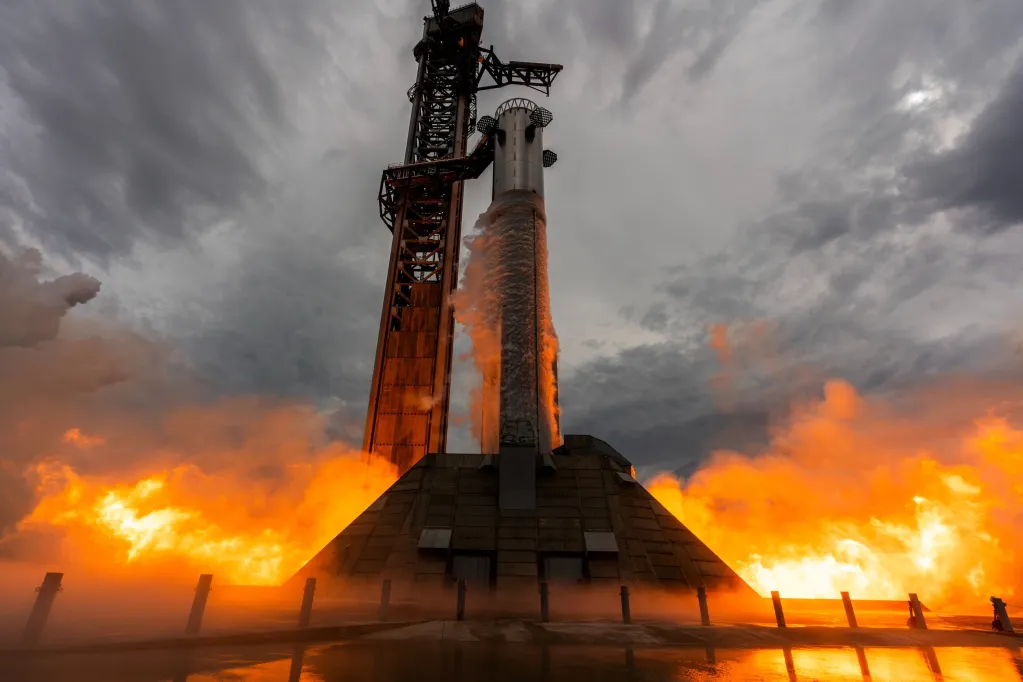
According to SpaceNews, SpaceX is targeting July 16 for its Starship Flight 13 mission. Launch is scheduled for a 90-minute window opening at 18:45 ET from the Starbase facility in Texas. This follows a successful static fire of the Super Heavy booster on July 10.
Corrective Actions
Flight 13 aims to resolve anomalies observed during Flight 12 (May 22). The previous mission saw the first flight of the Version 3 vehicle but failed to achieve a controlled soft splashdown. Hardware telemetry indicated that ship engine ignition timing caused the booster flip to deviate by 90 degrees, resulting in the failure of five Raptor engines and a premature boostback shutdown.
SpaceX has since modified the startup sequences and hardware to improve relight reliability and better handle timing variability. Internal diagnostics also addressed engine failures on both the booster and ship during the ascent phase of Flight 12.
Operational Testing
In a shift from previous mass simulators, Flight 13 will carry 20 functional Starlink V3 satellites. During the 65-minute suborbital profile, the satellites will deploy solar arrays and attempt cross-links with other satellites and a South African ground station. Because the trajectory remains suborbital, these assets will reenter the atmosphere minutes after deployment.
Regulatory Milestone
Launch remains contingent on the FAA closing the mishap investigation initiated after Flight 12. If Flight 13 succeeds in its technical objectives, SpaceX plans to transition to orbital profiles for Flight 14, accelerating the vehicle's readiness for NASA’s Artemis lunar campaign. Recovery and telemetry data from this flight will be critical for certifying the Raptor engine's multi-engine reliability.