Starship Flight 13: Functional Payload Deployment and Intact Splashdown
SpaceX successfully launched the 13th Starship test mission, deploying 20 functional Starlink V3 satellites and achieving the first-ever intact splashdown of the upper stage.
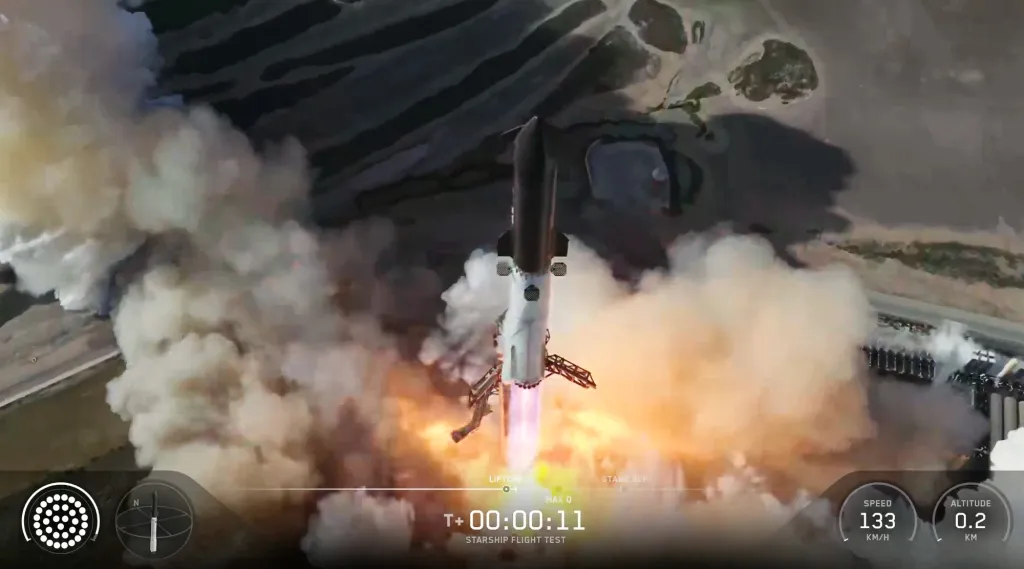
Mission Overview
On July 24 at 18:51 ET, SpaceX launched Flight 13 of the Starship system from Starbase, Texas. Tracking data confirmed a suborbital trajectory for the second flight of the Starship V3 architecture. According to SpaceNews, the mission successfully rectified turbopump issues that triggered a July 16 abort, though an anomaly remained with the Super Heavy booster's landing burn.
Payload and Performance
For the first time, Starship carried a functional payload of 20 Starlink V3 satellites. Deployed on a suborbital path, the units underwent 20 minutes of rigorous testing, including solar array articulation and laser-link communication. SpaceX reported successful telemetry downloads via radio-frequency and laser-optical links prior to the satellites' reentry.
Following deployment, the Starship upper stage executed a 14-second Raptor engine relight, a significant duration increase over previous tests. The vehicle then performed a high-velocity reentry, culminating in a soft splashdown in the Indian Ocean approximately 65 minutes post-liftoff.
Telemetry and Recovery
While the Super Heavy booster failed to ignite all necessary Raptor engines for its Gulf of Mexico splashdown, the Starship upper stage reached the Indian Ocean intact. SpaceX spokesperson Dan Huot noted that remaining afloat allowed for unprecedented heat shield data collection. Investigations into previous engine failures revealed that moisture-induced freezing in the liquid oxygen turbopumps caused earlier aborts—a hardware vulnerability SpaceX claims to have addressed via engine swaps and pad testing.
The Path to Orbit
With Flight 13 concluded, SpaceX transitions toward orbital capability. Internal projections suggest Flight 14 may attempt a full orbital profile, with a potential shift of launch operations to Florida for Flight 15. The success of the Starship V3 platform remains the primary focus for SpaceX’s short-term flight cadence.