Solar Orbiter Rewrites Solar Wind Dynamics
Data from the ESA-NASA Solar Orbiter mission is challenging long-held assumptions regarding the Sun's magnetic field and its influence on space weather.
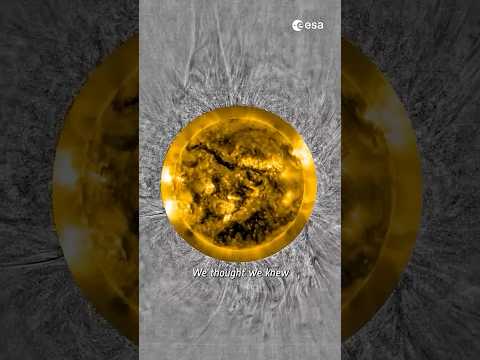
Solar Reconnaissance: Redefining the Star
Recent data transmissions from the Solar Orbiter have fundamentally altered the scientific community's understanding of our host star. According to the ESA YouTube channel, the mission has provided unprecedented clarity on solar atmospheric dynamics, exposing previously hidden mechanisms within the corona.
The Magnetic Engine
Central to the findings is the discovery of small-scale magnetic phenomena now identified as the primary drivers of the solar wind. Unlike the broad, uniform models previously theorized, the Sun’s output is driven by localized, high-frequency kinetic events. These observations were made possible through the spacecraft's high-resolution instruments, which allow for closer observation of the Sun than any previous European-led mission.
Impact on Space Weather
This shift in understanding is not merely academic. By identifying these specific magnetic triggers, researchers can better predict space weather events that threaten orbital infrastructure and terrestrial power grids. The data confirms that solar wind is far more turbulent and complex at its source than previously estimated. As Solar Orbiter continues its mission, the focus shifts to mapping these magnetic ‘switchbacks’—sudden reversals in the solar magnetic field that accelerate particles into deep space. The mission continues to serve as a critical asset in the European effort to master heliospheric science.