Solar Orbiter Decodes Magnetic Switchback Origins
New data from the ESA-led Solar Orbiter mission reveals the mechanism behind 'switchbacks'—sudden reversals in the Sun's magnetic field that drive the solar wind.
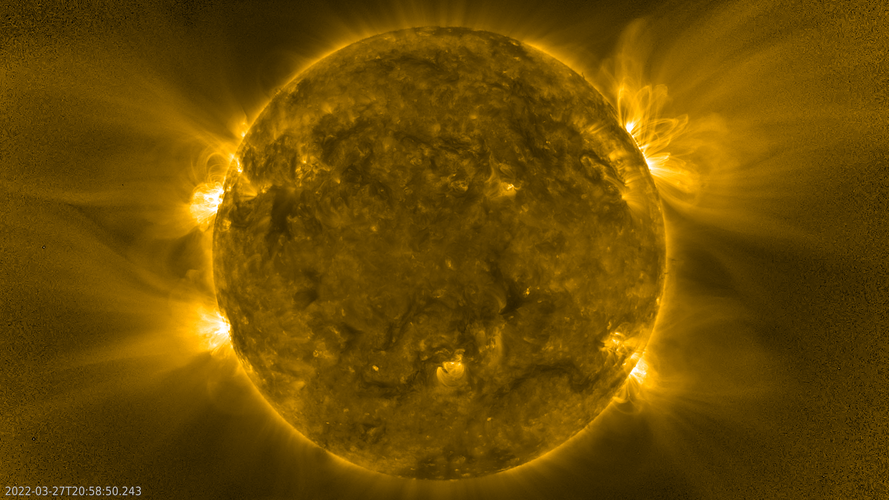
DATA ACQUISITION: HELIOGRAPHIC ANALYSIS
Solar Orbiter has provided the first definitive visual evidence explaining the origin of magnetic "switchbacks"—sudden, S-shaped reversals in the solar magnetic field. While these phenomena have been documented since the 1970s, their generative mechanism remained theoretical until now. According to ESA, high-resolution imagery from the Metis coronagraph has captured a definitive S-shaped plasma structure within the solar corona, confirming the "interchange reconnection" theory.
MECHANISM OF ACTION
The data indicates that switchbacks occur when open magnetic field lines, which extend into the solar system, interact with closed magnetic loops that emerge and return to the solar surface. When these distinct field lines reconnect, they snap into a new configuration, releasing a burst of energy and forming an S-shaped kink that propagates outward into space. This process acts as a primary accelerator for the solar wind.
MISSION IMPACT
This discovery was made during Solar Orbiter’s close perihelion pass on March 25, 2022. By correlating remote-sensing data from Metis with in-situ measurements, the mission team demonstrated that these magnetic disturbances are not merely local fluctuations but are intrinsic to the Sun’s atmospheric dynamics. This finding solves a decades-old mystery regarding how energy is transported from the solar surface to the heliosphere. Understanding these magnetic architectures is critical for refining space weather prediction models, protecting orbital infrastructure, and securing terrestrial power grids against solar interference.