Solar Occultations: Historical and Scientific Landmarks
A review of significant solar eclipses that shaped scientific history, from early astronomical verification to modern orbital observations.
Orbital Mechanics and Historical Impact
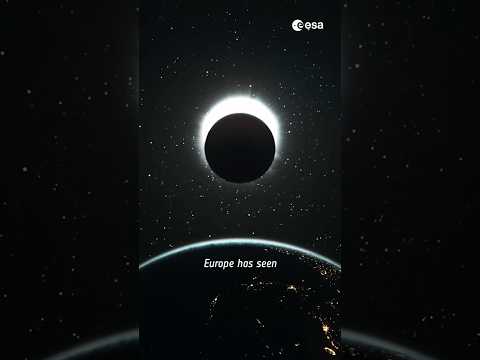
Solar eclipses represent more than a visual spectacle; they are fundamental calibration tools and verification events for astrophysical theory. According to documentation shared via the ESA YouTube channel, human observation of these alignments has transitioned from ancient superstition to rigorous orbital science.
The 1919 Relativity Test
Perhaps the most scientifically significant eclipse occurred on May 29, 1919. This event provided the observational theater required to test Albert Einstein’s General Theory of Relativity. By observing the deflection of starlight passing near the sun—only visible during a total eclipse—Sir Arthur Eddington confirmed that gravity indeed warps spacetime. This shifted the paradigm of physics from Newtonian mechanics to the relativistic model utilized today in satellite navigation.
Modern Observations
In the contemporary era, eclipses allow for the study of the solar corona, a region of the sun’s atmosphere that remains difficult to observe under standard conditions due to the sun’s blinding luminosity. While ground-based observers track these events for minutes, ESA’s suite of solar-observing satellites can occasionally simulate these conditions using internal coronagraphs—metal disks that mask the solar face. This technology replicates the eclipse effect, allowing for 24/7 monitoring of solar weather and Coronal Mass Ejections (CMEs).
Theoretical Significance
Every alignment provides refined data on the moon's exact topography and its influence on the "Baily’s beads" phenomenon. These data points are integrated into lunar mapping and navigation systems for upcoming lunar gateway missions. What was once an omen is now a data set.