Solar Dynamics: M-Class Flare Registered as Cycle Activity Intensifies
Heliophysics monitors have confirmed an M-class solar flare event on November 18, 2026. This medium-scale energetic discharge highlights ongoing solar volatility as NASA and international partners track systemic space weather impacts.
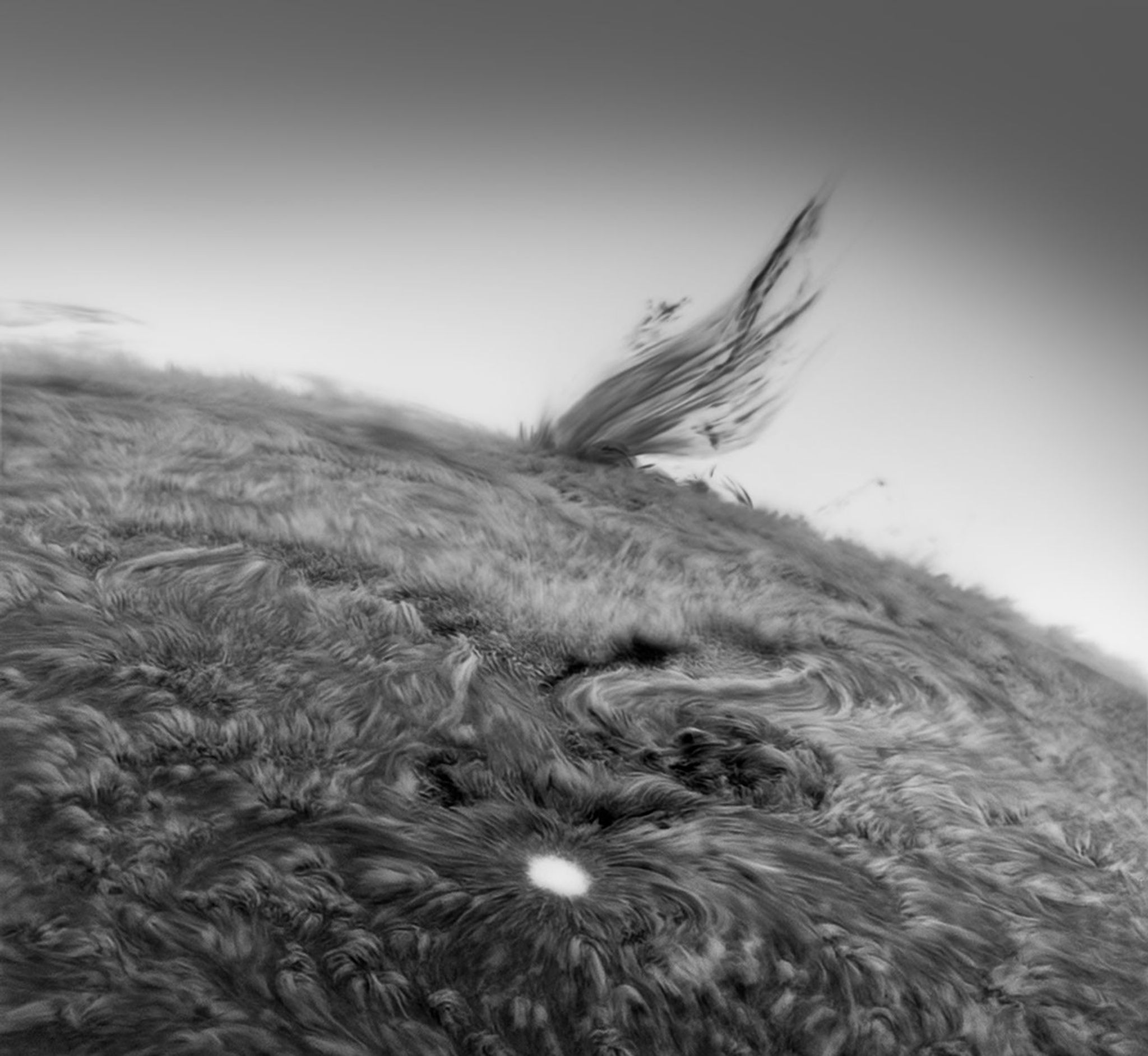
Solar Event Log: 2026.11.18
According to NASA Breaking News, solar observation platforms have recorded a significant M-class solar flare today, November 18, 2026. Classified as a medium-sized event, this discharge represents a substantial release of electromagnetic radiation from the solar atmosphere. While M-class flares are less intense than the catastrophic X-class events, they possess sufficient energy to cause brief radio blackouts at Earth's poles and minor radiation storms in the upper atmosphere.
Systemic Observations
Data retrieved from the Astronomy Picture of the Day (APOD) archive confirms the event occurred within the context of a broader increase in heliophysics activity. Current orbital assets, including the Solar Dynamics Observatory (SDO), remain at high-alert status to track potential Coronal Mass Ejections (CMEs) that often accompany such flares. These plasma clouds can interact with Earth's magnetosphere, potentially disrupting low-Earth orbit (LEO) satellite constellations and terrestrial power grids.
Operational Status
This event coincides with a period of high mission density. NASA currently maintains critical monitoring for the Artemis lunar program, the International Space Station (ISS), and deep-space assets such as the James Webb Space Telescope and Voyager 1. As the sun continues its current cycle, these M-class events serve as a reminder of the volatile environment surrounding our orbital infrastructure. Ground crews are advised to monitor trans-polar communication frequencies for signal degradation.
Spacechannel.eu will continue to track solar output data as it impacts European telecommunications and the ESA’s orbital hardware.