SKYROOT REACHES ORBIT: AAGAMAN MISSION MARKERS PRIVATE SECTOR ASCENT
India's Skyroot Aerospace has become the first private entity in the country to achieve orbital insertion, deploying multiple payloads via its Vikram-1 launch vehicle.
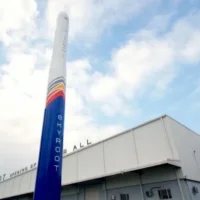
MISSION LOG: AAGAMAN
India has officially integrated private assets into the orbital launch market. On Saturday, Skyroot Aerospace successfully inserted its Vikram-1 rocket into a 450-km orbit from the Satish Dhawan Space Centre. According to Payload, the mission—designated "Aagaman" (Sanskrit for arrival)—marks the first time a privately developed Indian vehicle has reached orbit.
TECHNICAL PERFORMANCE
The three-stage powerhouse deployed multiple customer payloads and experiments approximately 15 minutes post-liftoff. This milestone follows the 2022 suborbital flight of Vikram-S, marking a rapid transition from atmospheric testing to orbital operations for the Hyderabad-based firm.
DATA CORE: ECONOMIC SHIFT
Skyroot, founded in 2018 by veteran ISRO scientists, is now India’s first space unicorn with a valuation of $1.1B. This trajectory aligns with a broader systemic opening of the Indian space sector. In 2020, New Delhi ended state dominance, leading to the emergence of over 400 space startups.
Strategic indicators include:
Market Growth: India’s space economy is projected to scale from $8.4B to $44B by 2033.
Policy Updates: 2024 FDI amendments and the 2023 Indian Space Policy are aggressively courting foreign capital (Sherpalo, BlackRock).
* Direct Investment: The state-anchored Antariksh Venture Capital Fund recently deployed $6M into satellite manufacturer Dhruva Space.
FUTURE VECTORS
Skyroot aims to increase production cadence from one to two units per month. Upcoming iterations include the Vikram-1U, featuring strap-on boosters, and the heavy-lift Vikram-2, designed to transport 900kg to Low Earth Orbit (LEO) by 2027. The company will prioritize repeatability through additional development flights before commencing full commercial service.