SAGITTARIUS A*: VOID SCAN DETECTS DUST AND WATER SIGNATURES
New deep-space monitoring of the Milky Way’s central supermassive black hole reveals complex chemical signatures including dust and water, providing critical data on the environment surrounding Sagittarius A*.
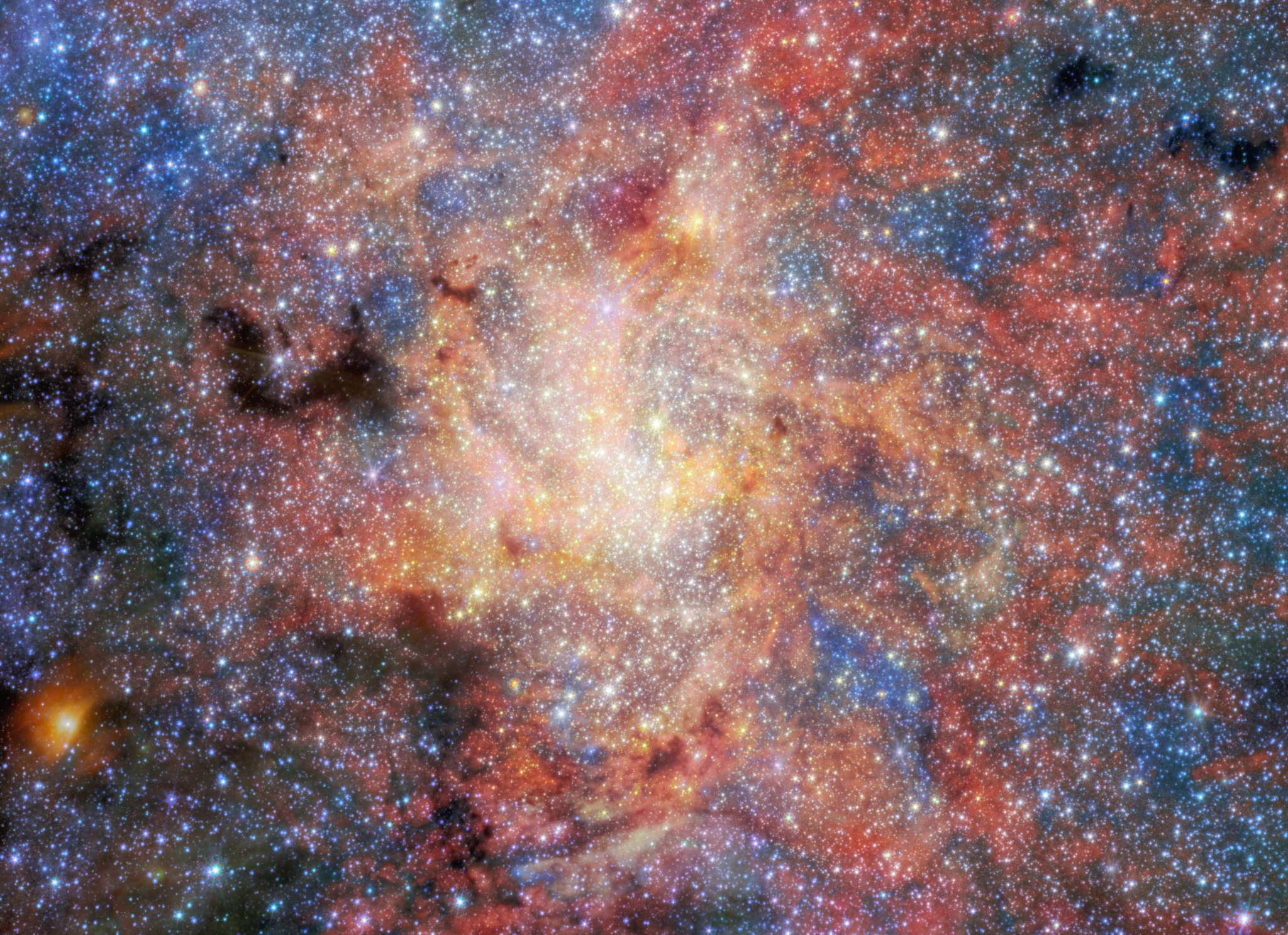
Galactic Core Analysis: Sagittarius A*
Sensor arrays monitoring the heart of the Milky Way have returned high-resolution data regarding the immediate vicinity of Sagittarius A*, the supermassive black hole dominating our galactic center. According to NASA Breaking News, recent imaging and spectroscopic analysis have confirmed the presence of significant dust concentrations and water signatures within the turbulent region surrounding the gravitational singularity.
Chemical Composition and Dynamics
The detection of these elements suggests a more complex chemical environment than previously modeled. While the extreme tidal forces and radiation near a black hole typically preclude stable molecular structures, the presence of water ice or vapor provides a unique window into the accretion disc's lifecycle. These particulates act as tracers for the movement of matter as it spirals toward the event horizon, allowing astrophysicists to map the high-energy interactions occurring approximately 26,000 light-years from Earth.
Observational Framework
This data serves as a critical baseline for ongoing investigations into how supermassive black holes influence the evolution of their host galaxies. By tracking the distribution of dust and the thermal signatures of water, researchers can better understand the mechanism of mass intake and the resulting energetic outflows. The findings reinforce the necessity of multi-wavelength observation in deciphering the extreme physics governing the galactic nucleus. Further telemetry is required to determine the exact origin of these materials—whether they are remnants of consumed stellar bodies or synthesized within the local high-pressure environment.