Rubin Observatory: Mapping the Cosmos Field
NASA highlights the Vera C. Rubin Observatory’s primary survey targets, focusing on the dark matter and large-scale structures defining our universe.
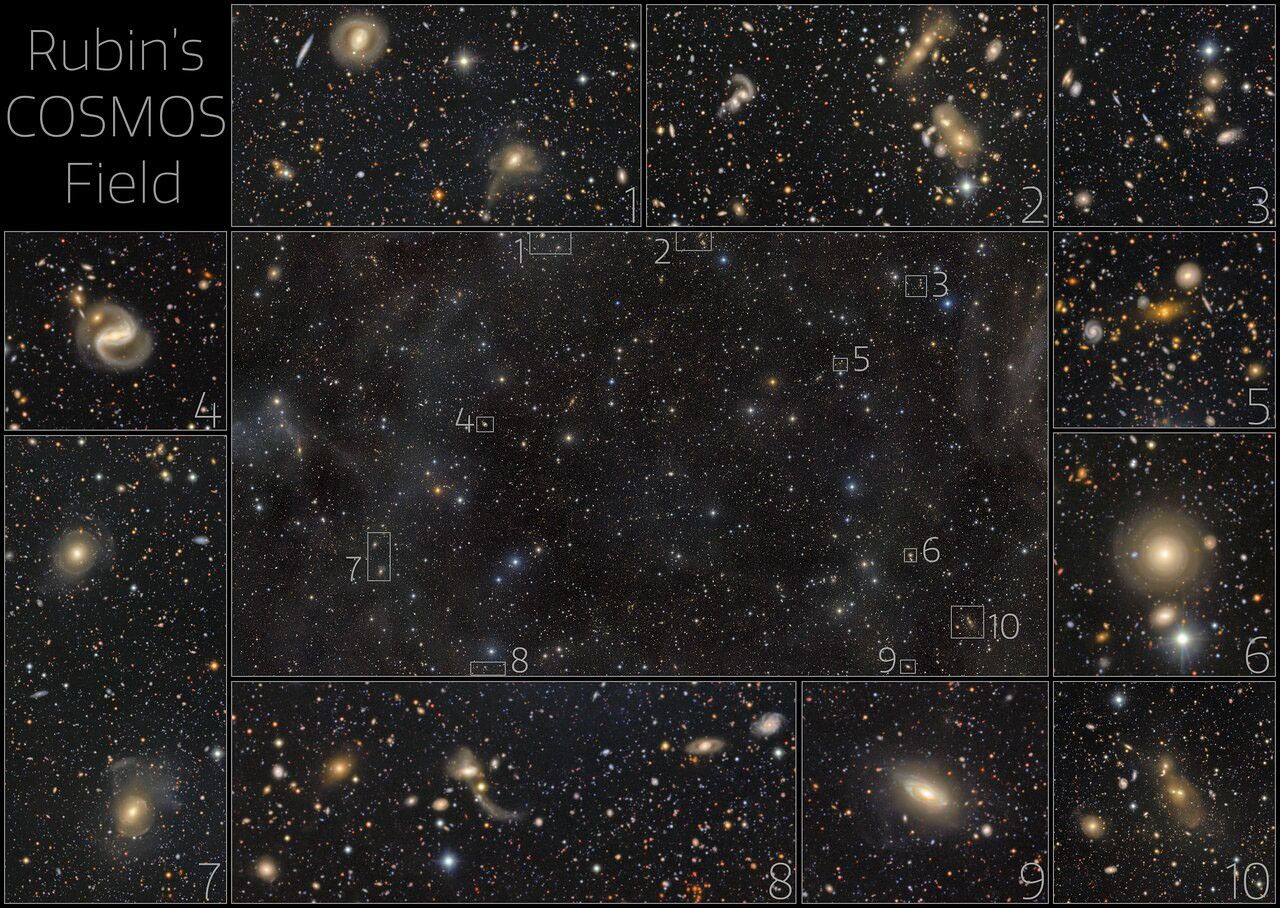
Data Influx: The Vera C. Rubin Survey
According to NASA Breaking News, the scientific community has fixed its coordinates on the Rubin’s Cosmos Field, a primary target for the upcoming Legacy Survey of Space and Time (LSST). The Vera C. Rubin Observatory, situated in Chile, is engineered to provide the most comprehensive map of the southern sky to date.
Analytical Objectives
The mission’s focus remains the quantification of dark energy and dark matter. By observing the Cosmos Field—an area already rich in multi-wavelength data from telescopes like Hubble and Chandra—the Rubin Observatory will correlate new deep-wide-fast scanning data with existing galactic inventories. The terminal goal is to track the expansion of the universe and the evolution of its largest structures over a ten-year operational span.
System Integration
This field represents more than just a visual capture; it is a stress test for the observatory’s 3.2-gigapixel camera, the largest digital sensor ever constructed for astronomy. As the facility nears full operational status in late 2026, the data gathered here will refine our understanding of the cosmic web—the invisible scaffolding that dictates where galaxies form and how they migrate through deep time.
Expect high-frequency updates as the Rubin Observatory transitions from calibration to full-scale scientific output, providing a steady stream of petabytes for global astrophysical analysis.