Rubicon Transitions Velox ASCENT Thruster to Production Following Test Success
Rubicon Space Systems has moved its Velox 5N ASCENT monopropellant thruster into flight production after exceeding performance objectives in hot-fire vacuum testing.
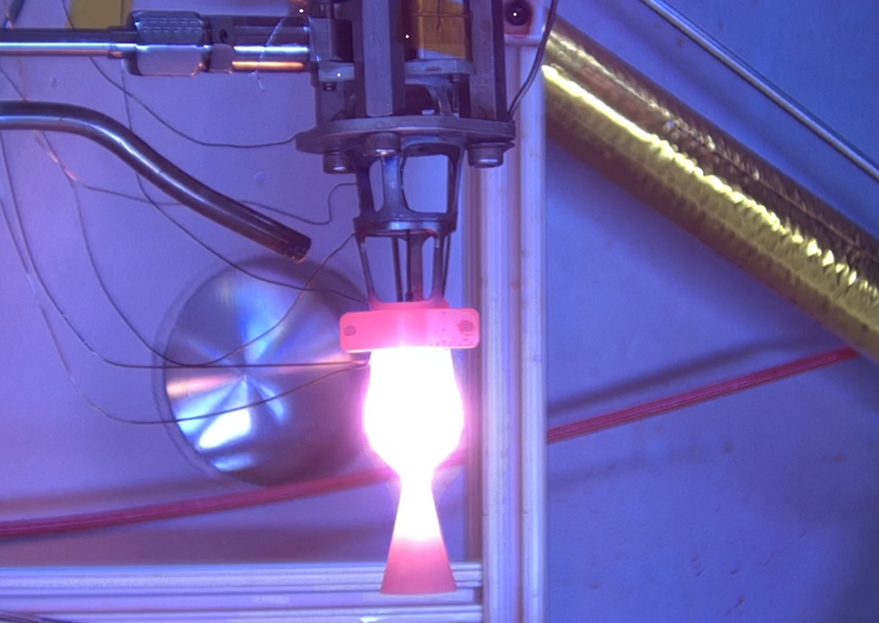
VELOX SYSTEM STATUS: FLIGHT READY
Rubicon Space Systems has officially transitioned the Velox 5-newton (5N) ASCENT monopropellant thruster from development to flight production. The shift follows a rigorous hot-fire testing campaign conducted at the company’s vacuum altitude facility in Huntsville, Alabama.
According to SpaceNews, the Velox 5N utilizes ASCENT (Advanced Spacecraft Energetic Non-Toxic Propellant), a high-density hydrazine alternative originally developed by the U.S. Air Force Research Laboratory. Rubicon Director Daniel Cavender confirmed that the testing regimen evaluated the hardware across feed pressures ranging from 25% to 125% of nominal levels, mapping duty cycles between 1% and 100% to establish definitive performance margins.
PERFORMANCE METRICS
The hardware demonstrated significant technical advantages over legacy hydrazine systems:
Specific Impulse: 255 seconds—approximately 10% higher than standard hydrazine thrusters.
Fuel Density: ASCENT provides a nearly 50% density increase over traditional propellants.
* Throughput: The campaign qualified the thruster for nearly 14 kilograms of propellant throughput, a figure Rubicon claims is a record for the 1N to 5N thruster class.
DEPLOYMENT TIMELINE
Rubicon, a division of Plasma Processes founded in 2022, is now fulfilling orders for three undisclosed customers. The first flight-ready units are scheduled for delivery in early 2027, supporting an orbital debut later that year. Additional missions are slated through 2028.
Beyond the Velox 5N, Rubicon is currently developing a 110-newton ASCENT prototype under a 2025 NASA contract and is preparing to launch a propulsion system for NASA’s Green Propulsion Dual Mode technology demonstration mission later this year.