ROSALIND FRANKLIN ROVER COMPLETES LEG DEPLOYMENT DIAGNOSTICS
ESA’s ExoMars rover has successfully demonstrated its leg-stretching sequence, a critical milestone for ensuring the vehicle can navigate the rugged Oxia Planum terrain on Mars.
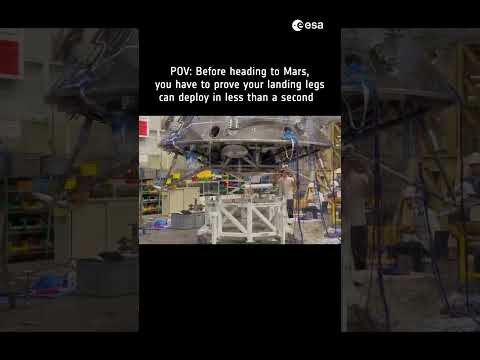
Mechanical Integrity Verified
In a recent technical demonstration, the Rosalind Franklin rover underwent a series of deployment diagnostics aimed at validating its locomotion hardware. According to ESA YouTube, the rover has successfully "stretched its legs," completing the intricate mechanical sequence required to transition from its stowed launch configuration to an operational stance.
Navigation Capabilities
This deployment is not merely a structural check; it is the foundation of the mission’s mobility system. The ExoMars rover utilizes a unique six-wheel locomotion design that combines independent steering with a sophisticated walking capability. By adjusting its legs, the rover can navigate steep inclines and overcome obstacles that would immobilize standard wheeled platforms. This flexibility is essential for the mission's primary objective: reaching scientifically rich locations at Oxia Planum to drill for signs of past or present life.
Strategic Importance
The success of these mechanical tests minimizes the risk of deployment failure once the spacecraft reaches the Martian surface. As the mission prepares for its revised launch window, these diagnostic milestones ensure that the European-built hardware remains resilient. The ability to deploy and manipulate its wheel assemblies provides the redundancy required for a long-term mission in a high-radiation, dust-heavy environment. Following the successful leg deployment, engineers will continue to stress-test the rover's drilling and analytical instruments, ensuring the payload is ready for the rigors of deep-space transit and extraterrestrial operations.