Roman Space Telescope: Visualizing the Future of Wide-Field Astrophysics
NASA releases new visual documentation for the Nancy Grace Roman Space Telescope, a next-generation observatory designed to unlock the mysteries of dark energy and exoplanets.
Orbital Surveillance Upgrade
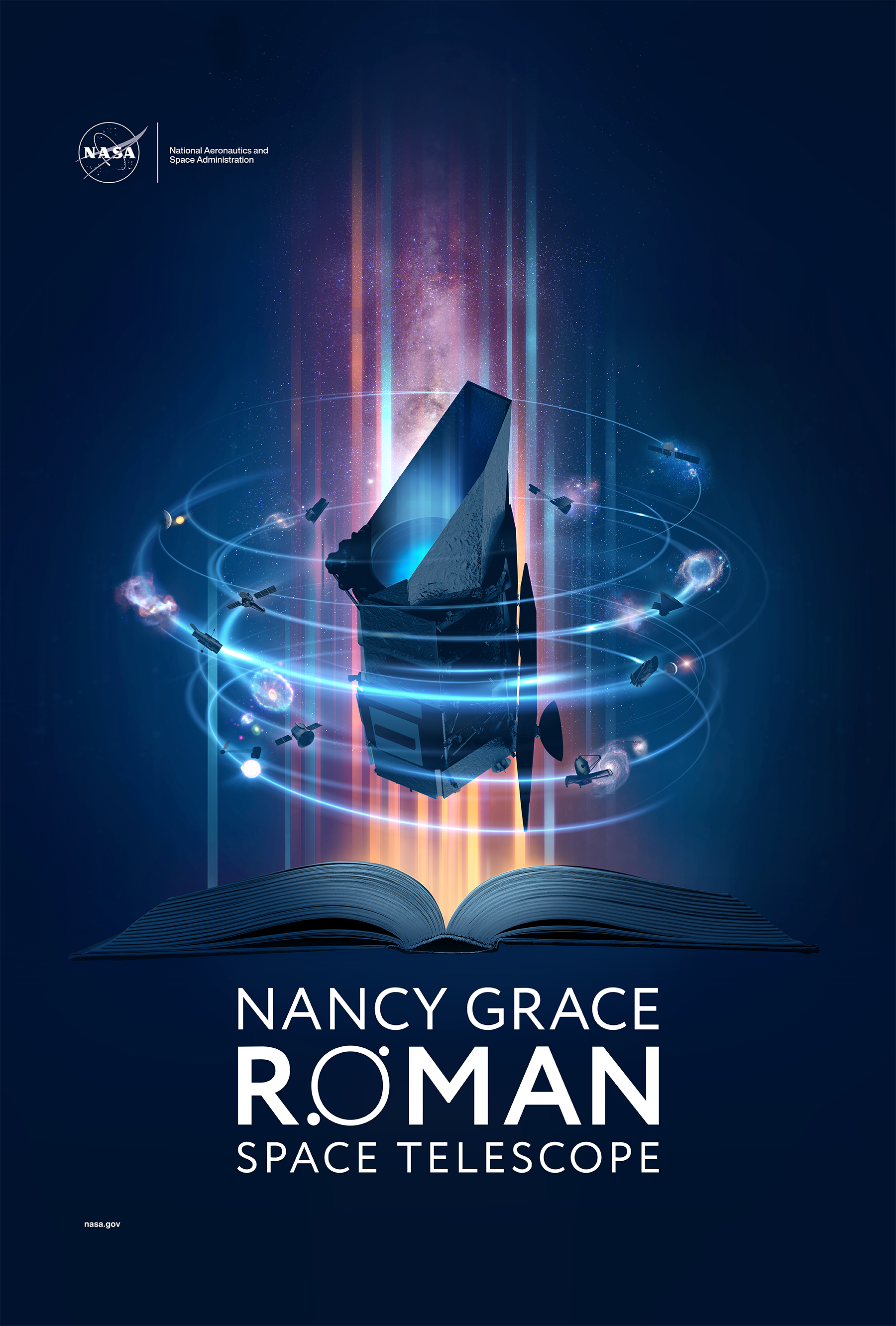
According to NASA Breaking News, the agency has released new educational and visual assets for the Nancy Grace Roman Space Telescope. This mission represents a significant leap in wide-field infrared surveying, intended to complement the high-resolution narrow-field capabilities of the James Webb Space Telescope.
Technical Mission Parameters
The Roman Space Telescope (formerly WFIRST) is engineered to solve two of the most critical puzzles in modern astrophysics: the nature of dark energy and the census of exoplanetary systems. By utilizing a field of view 100 times larger than that of Hubble, the observatory will map the large-scale structure of the universe with unprecedented speed, gathering data on billions of galaxies over its multi-year primary mission.
Data Distribution and Public Assets
The recent documentation release includes high-resolution posters and technical summaries designed for mission outreach. These assets highlight the telescope's unique ability to survey the cosmos in the infrared spectrum, providing both the scientific community and the public with a visual roadmap of its upcoming deployment. As the mission progresses toward its scheduled launch in the mid-2020s, these resources serve as a baseline for understanding the scale of the upcoming cosmic census.
NASA's continued development of the Roman mission underscores a shift toward "big data" astronomy, where massive statistical samples of the universe become available for analysis by international research teams.