Roman Space Telescope to Track Extragalactic Stellar Shredding
NASA’s upcoming Nancy Grace Roman Space Telescope is engineered to detect thousands of Tidal Disruption Events, providing a massive dataset on how supermassive black holes consume stars.
Surveillance of the Cosmic Deep
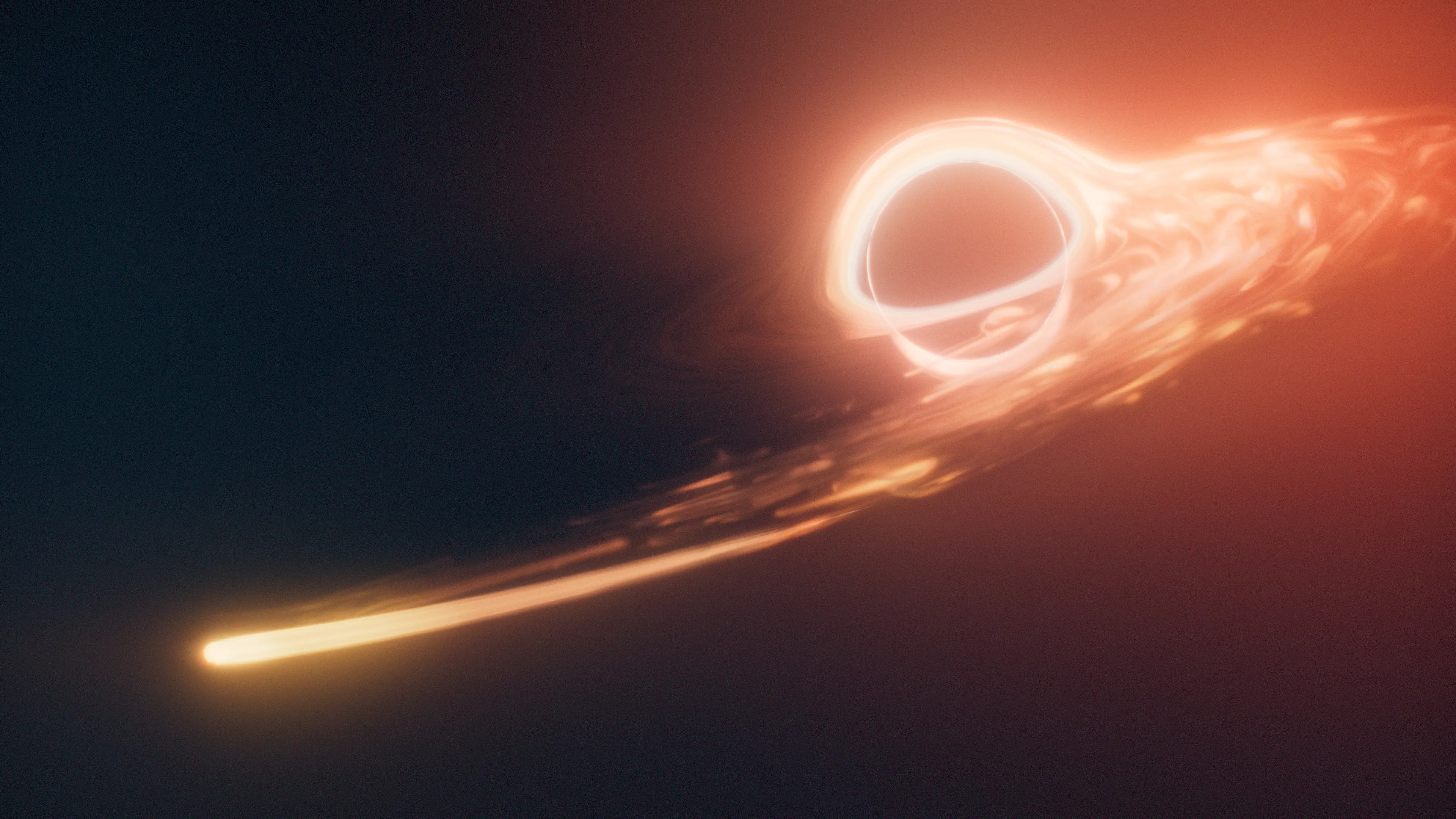
According to NASA Breaking News, the Nancy Grace Roman Space Telescope is being positioned as a primary instrument for auditing the violent lifecycle of galaxies. The mission centers on the observation of Tidal Disruption Events (TDEs), rare occurrences where a star wanders too close to a supermassive black hole. The resulting gravitational tidal forces exceed the star's self-gravity, stretching it into a stream of stellar debris—a process colloquially termed 'spaghettification.'
Scaling the Data Harvest
Current terrestrial and orbital observatories detect these events sporadically, identifying approximately 100 TDEs since the first discovery. The Roman Telescope is projected to catalyze a paradigm shift in this data collection. By utilizing its High Definition Wide Field Instrument, Roman will survey the sky with a field of view 100 times larger than Hubble. NASA scientists estimate the probe will identify thousands of TDEs annually, pushing the detection limit to several billion light-years into the deep cosmos.
Analytical Objectives
The mission's primary objective is to move beyond individual case studies and toward statistical analysis. By tracking the brightness of distant galaxies over time—a technique known as time-domain astronomy—Roman will archive the specific 'flare' signature of consumed stars. This data will allow researchers to measure the mass and spin of black holes that are otherwise dormant and invisible. Furthermore, the telescope's ability to see in the infrared spectrum will reveal events currently obscured by interstellar dust, providing a comprehensive census of the universe's most efficient predators.