Roman Space Telescope: First Light Unveiling Scheduled
NASA confirms an upcoming public release of the first imaging data from the Nancy Grace Roman Space Telescope, marking a new era in wide-field infrared deep space surveyance.
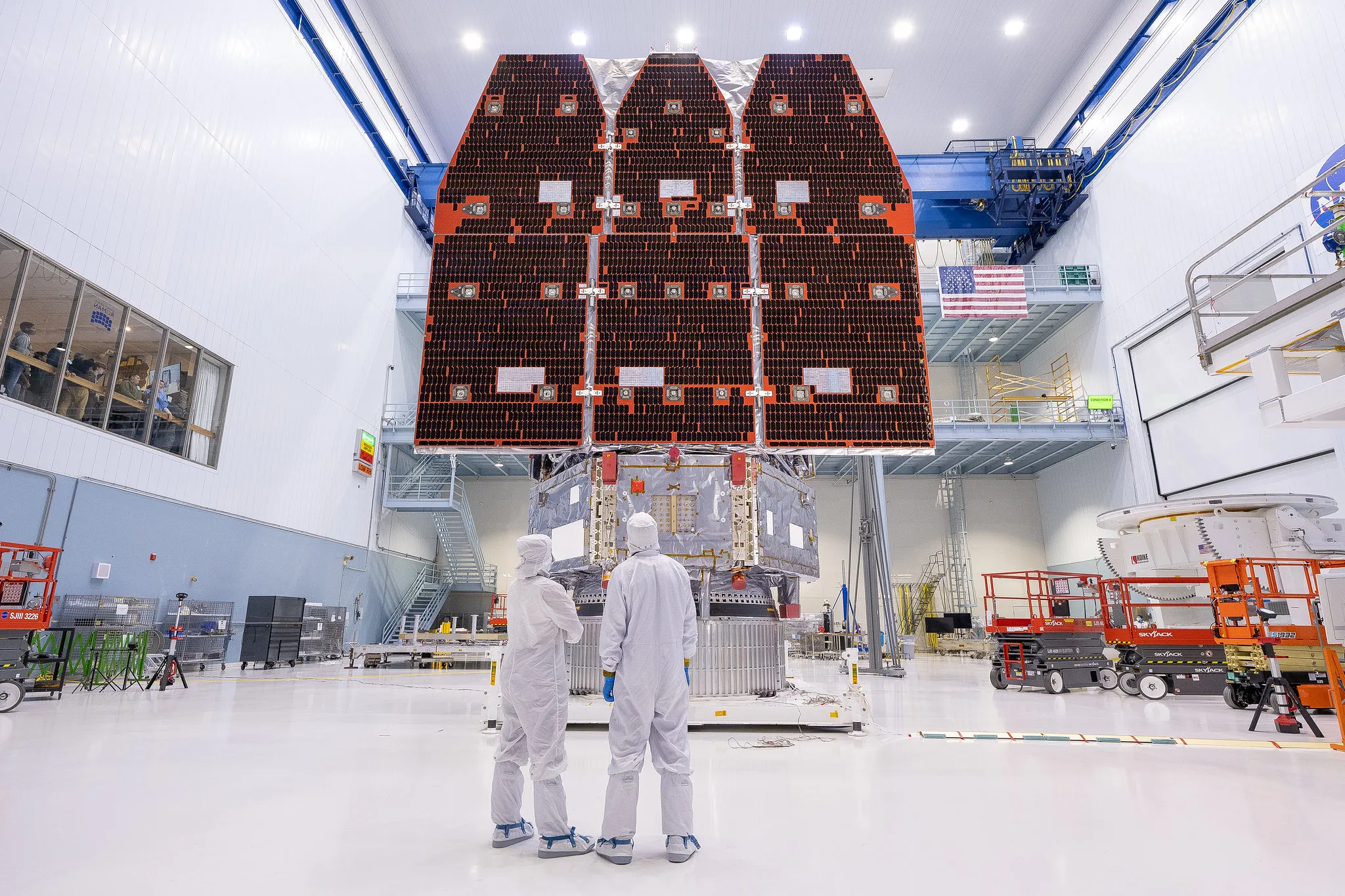
DATA TRANSMISSION: ROMAN TELESCOPE FIRST LIGHT
NASA has officially extended an invitation to the media and the global scientific community to witness the first images captured by the Nancy Grace Roman Space Telescope. According to NASA Breaking News, this event marks the primary technical milestone for a mission designed to solve the structural mysteries of the universe, specifically targeting dark energy and exoplanetary demographics.
TECHNICAL OVERVIEW
Named after Nancy Grace Roman, NASA’s first chief astronomer, the observatory features a field of view 100 times greater than that of the Hubble Space Telescope. While Webb focuses on deep, narrow-field infrared targets, Roman is engineered for wide-scale galactic census-taking. This forthcoming data release will serve as the first proof-of-concept for its primary instrument, showcasing its ability to map massive swaths of the sky with Hubble-level resolution.
OPERATIONAL STATUS
The invitation signals that the observatory’s critical commissioning phases are proceeding within operational parameters. By opening the event to the public, the agency aims to demonstrate the specific advantages of its survey-based approach to astrophysics. The data set is expected to provide unprecedented clarity on large-scale cosmic structures, which are vital for European and international researchers currently mapping the expansion of the universe.
STRATEGIC IMPACT
The Roman mission represents the next logic step in the Great Observatories lineage. As the international community prepares for this deluge of new information, the upcoming reveal will confirm whether the telescope's hardware can handle the extreme precision required for its mission to hunt for gravitational microlensing events and distant supernovae.