Roman Space Telescope Deploys for Deep-Space Transit
NASA’s Nancy Grace Roman Space Telescope has successfully launched via SpaceX Falcon Heavy, beginning its journey to L2 to map the dark universe with a field of view 100 times larger than Hubble’s.
# Roman Space Telescope Deploys for Deep-Space Transit
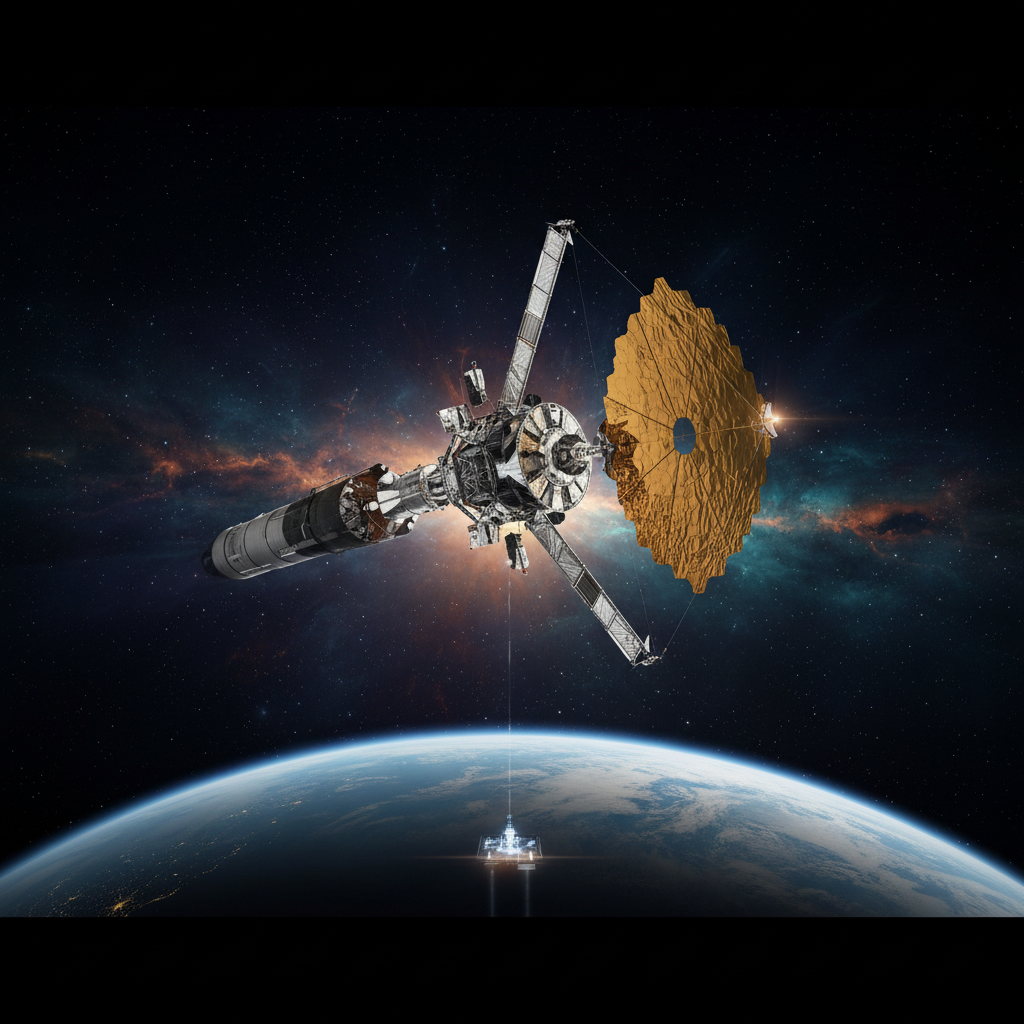
NASA has successfully deployed its next-generation flagship mission, the Nancy Grace Roman Space Telescope. The observatory launched at 07:26 ET on Sunday from Kennedy Space Center, integrated onto a SpaceX Falcon Heavy rocket. Its destination is the second Lagrange Point (L2), where it will undergo a rigorous commissioning period.
According to Payload, the mission survived four separate attempts by the White House to terminate its funding during the Trump administrations. Despite these political hurdles and a pandemic-era schedule adjustment, the project launched approximately nine months ahead of its May 2027 readiness target. Morgan Van Arsdall, NASA Roman Operations Manager, attributed this efficiency to the team’s discipline in maintaining the original 2010 design specifications.
Scientific Objectives
The Roman telescope is designed to address fundamental questions regarding dark energy and dark matter. By measuring light from an estimated one billion galaxies, the mission aims to map the distribution of invisible matter across space-time. Furthermore, it will utilize gravitational microlensing to detect and photograph exoplanets.
Operational Capability
Roman bridges a critical gap in the existing Great Observatories fleet. While Hubble and JWST are designed for high-resolution study of narrow targets, Roman offers a field of view at least 100 times larger than Hubble’s. Operating primarily in the near-infrared, it provides the wide-area surveys necessary to identify targets for its predecessors to analyze in detail.
The mission is named in honor of Nancy Grace Roman, NASA's first chief of astronomy. Often called the "Mother of Hubble," Roman was a pivotal figure in establishing the agency's space-based observation programs. The science team expects the first operational data to arrive within a year, potentially providing a transformative shift in our understanding of universal structure.