Roman Space Telescope Deployed to Map the Dark Universe
NASA has successfully launched the Nancy Grace Roman Space Telescope, a next-generation observatory designed to unravel the mysteries of dark energy and dark matter from deep space.
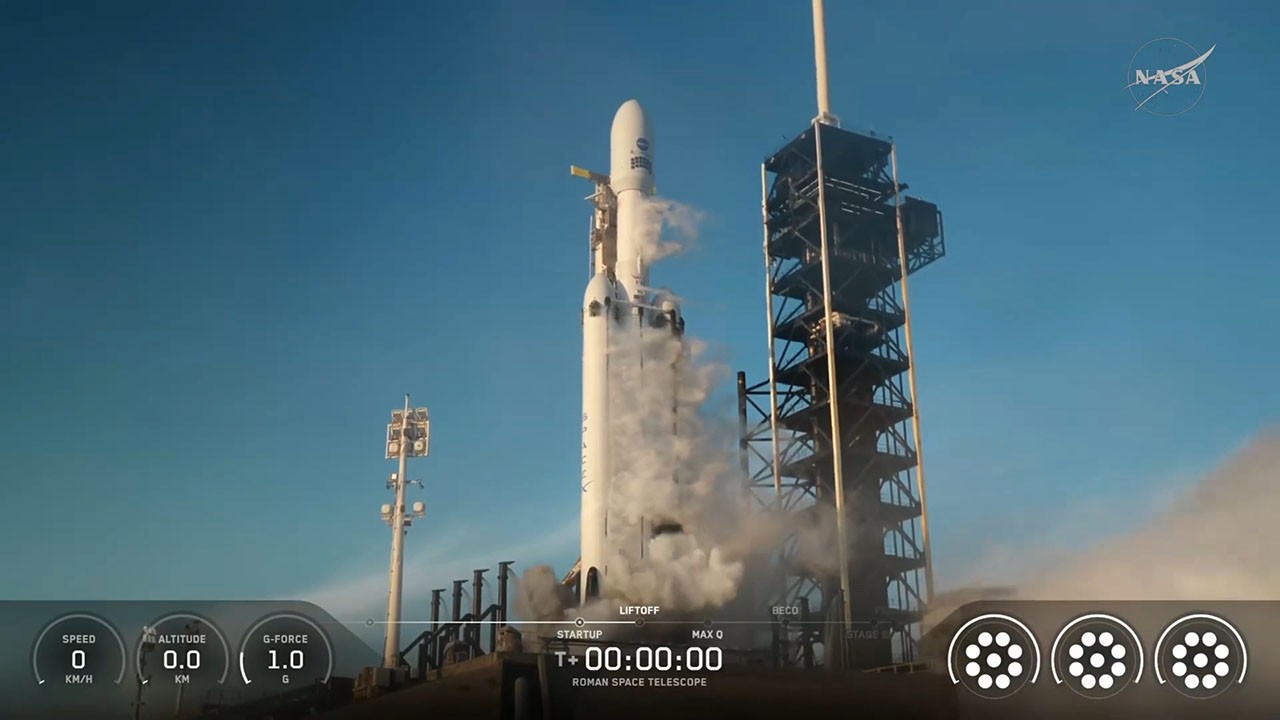
Orbital Insertion Confirmed
Data feeds from NASA Breaking News confirm the successful launch and deployment of the Nancy Grace Roman Space Telescope. The mission, which reached orbit on August 31, 2026, marks the beginning of a high-priority survey focused on the "dark universe." The observatory is engineered to investigate the fundamental forces driving the expansion of the cosmos, specifically targeting the elusive phenomena of dark matter and dark energy.
Mission Objectives
Operating from a stable orbit, the Roman Space Telescope will provide a field of view 100 times greater than that of the Hubble Space Telescope. This wide-angle capability is essential for mapping the distribution of galaxies and searching for exoplanets via microlensing. By observing large swaths of the sky in infrared, the mission aims to provide the statistical depth required to solve long-standing questions in modern astrophysics.
Operational Status
While the Roman telescope begins its commissioning phase, other administrative and logistical adjustments are occurring within the U.S. space sector. According to official reports, NASA and SpaceX have recently adjusted the launch window for the Crew-13 mission, ensuring sequence optimization following the telescope’s deployment. Additionally, executive actions have been initiated to establish a dedicated U.S. Space Academy, signaling a broader institutional push toward specialized space education.
Next Phases
Initial instrument calibration is expected to follow shortly. The scientific community anticipates that the data harvested by Roman will complement the deep-field observations of the James Webb Space Telescope, providing a comprehensive dataset of the evolution of the early universe.