Roman Deployed: NASA and ESA Infrared Surveyor Enters Orbit
NASA’s Nancy Grace Roman Space Telescope has successfully launched from Kennedy Space Center, marking the start of a multi-year mission to map the infrared universe with unprecedented precision.
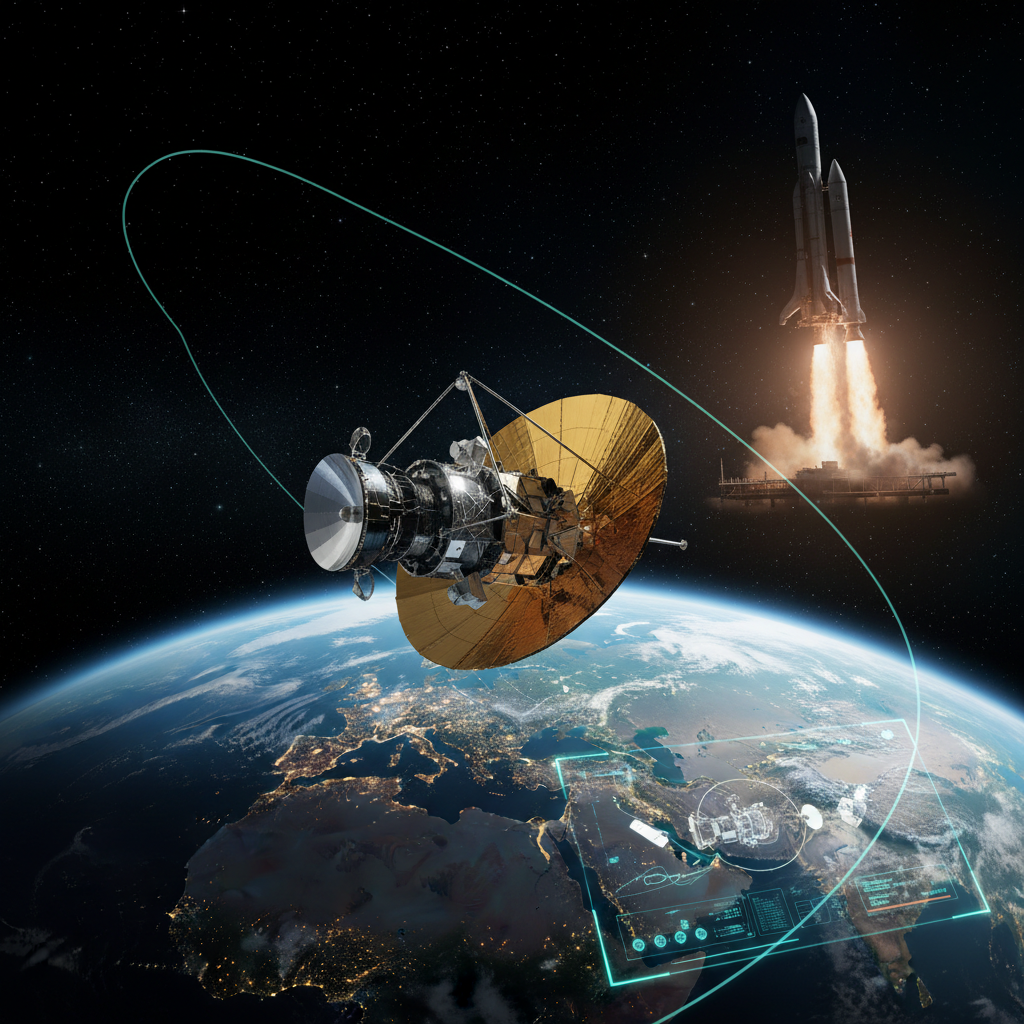
Orbital Insertion Confirmed
At 13:26 CEST on 30 August 2026, the Nancy Grace Roman Space Telescope successfully cleared the launch pad at NASA’s Kennedy Space Center. The observatory was carried into orbit via a SpaceX Falcon Heavy launch vehicle, initiating a mission designed to revolutionize our understanding of cosmic structures.
According to ESA, the mission represents a critical leap in wide-field infrared surveying. Roman is engineered to capture data across the visible to near-infrared spectrum, offering a field of view 100 times larger than that of the Hubble Space Telescope while maintaining comparable image resolution. This capability allows the spacecraft to map the sky at speeds previously unattainable by deep-space observatories.
Mission Parameters
The telescope’s primary objective is to investigate the distribution of dark matter, the expansion of the universe, and the presence of exoplanets through gravitational microlensing. While the hardware is a NASA-led initiative, European involvement remains significant. ESA is providing critical support in hardware components, including the star tracker detectors and data processing contributions, ensuring European scientists have early access to the mission’s extensive datasets.
Operational Outlook
Following its successful separation from the Falcon Heavy upper stage, Roman will begin a multi-month transit to the second Lagrange point (L2). Once commissioned, it will complement the high-resolution observations of the James Webb Space Telescope and the wide-area mapping of Euclid. The synergy between these three observatories is expected to define the next decade of astrophysical research, providing a high-fidelity map of the evolution of the cosmos.