Remnant Pa 30: Tracking the Ghost of 1181 CE
A deep-space analysis of Supernova Remnant Pa 30 reveals the complex aftermath of a late 12th-century stellar detonation, offering new insights into Type Iax events.
DATA LOG: EVENT PA 30
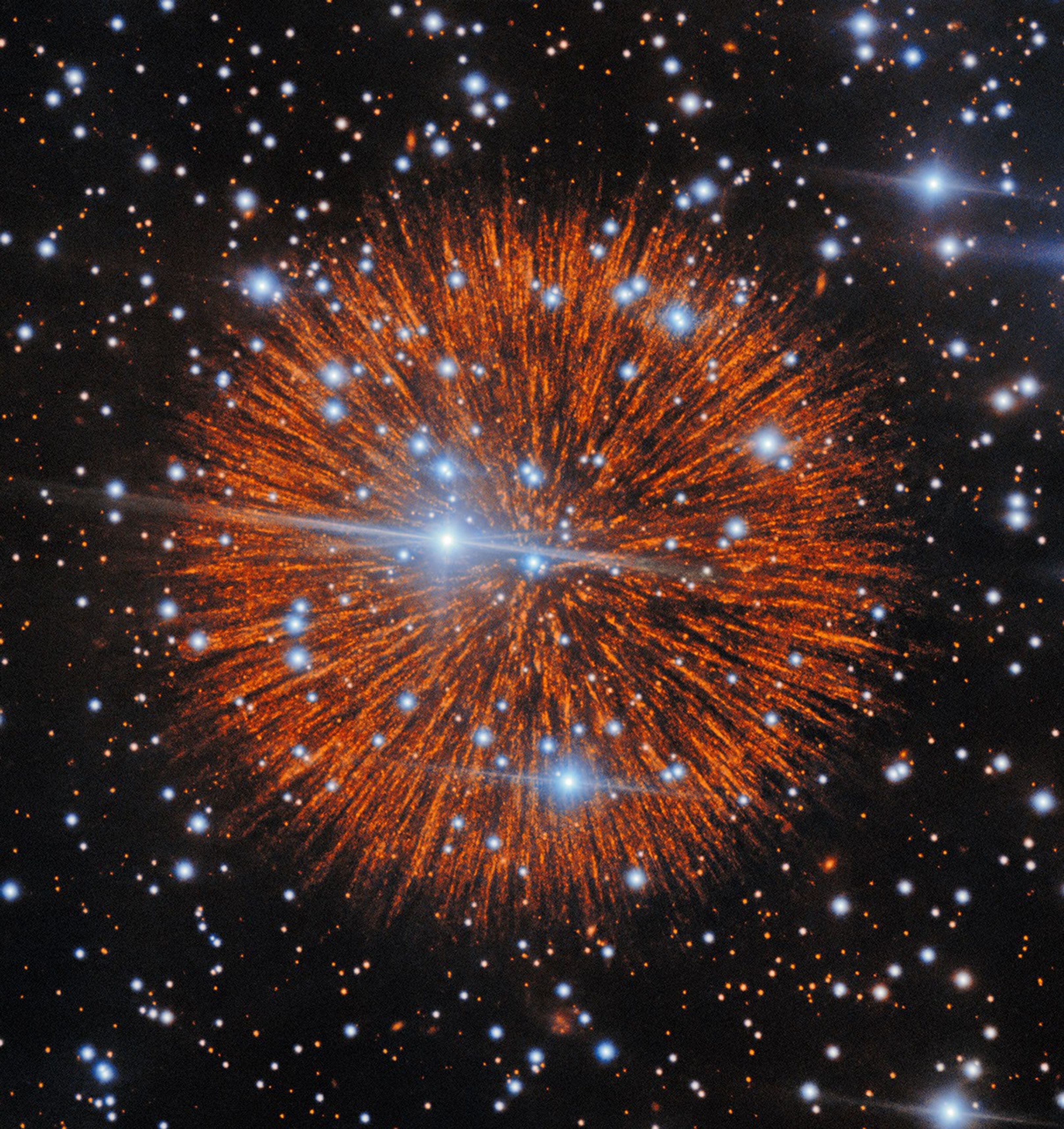
The cosmos maintains a long memory. According to NASA Breaking News, modern imaging has provided a crystalline view of Supernova Remnant (SNR) Pa 30, the gaseous shrapnel remains of a stellar explosion first documented by astronomers in 1181 CE.
Located in the constellation Cassiopeia, Pa 30 is not a standard debris field. It is categorized as the product of a Type Iax supernova—a distinctive stellar event often referred to as a "zombie supernova." Unlike traditional Type Ia explosions that result in the total thermal destruction of a white dwarf, Type Iax events are less energetic, frequently leaving behind a partially intact stellar core.
ANALYSIS
The re-examination of Pa 30 utilizes high-resolution data to map the sulfur-rich filaments expanding outward from the central source. These thin, needle-like structures radiate in a geometric pattern that suggests a highly symmetrical, yet violent, ejection of mass. The central object remaining at the heart of the nebula is a "Parker’s Star," one of the hottest stars in the known galaxy, possessing surface temperatures that defy standard classification.
For researchers, Pa 30 serves as a temporal bridge. By calculating the expansion velocity of the nebula’s filaments, investigators have effectively rewinded the clock, confirming that the expansion began approximately 845 years ago. This aligns perfectly with historical observations of a "guest star" that appeared in the night sky in 1181 CE, visible for nearly six months before fading.
STATUS REPORT
The study of this remnant provides critical telemetry on the survival of white dwarfs under extreme conditions. Pa 30 remains a primary target for spectroscopy, as it represents a rare opportunity to observe the long-term evolution of sub-luminous supernova chemistry.