REDITUS SPACE FINALIZES ENOS: A UNITARY RECOVERY ARCHITECTURE
Startup Reditus Space has completed assembly of ENOS, a 200kg spacecraft designed for high-mass recovery, targeting a SpaceX rideshare launch this autumn.
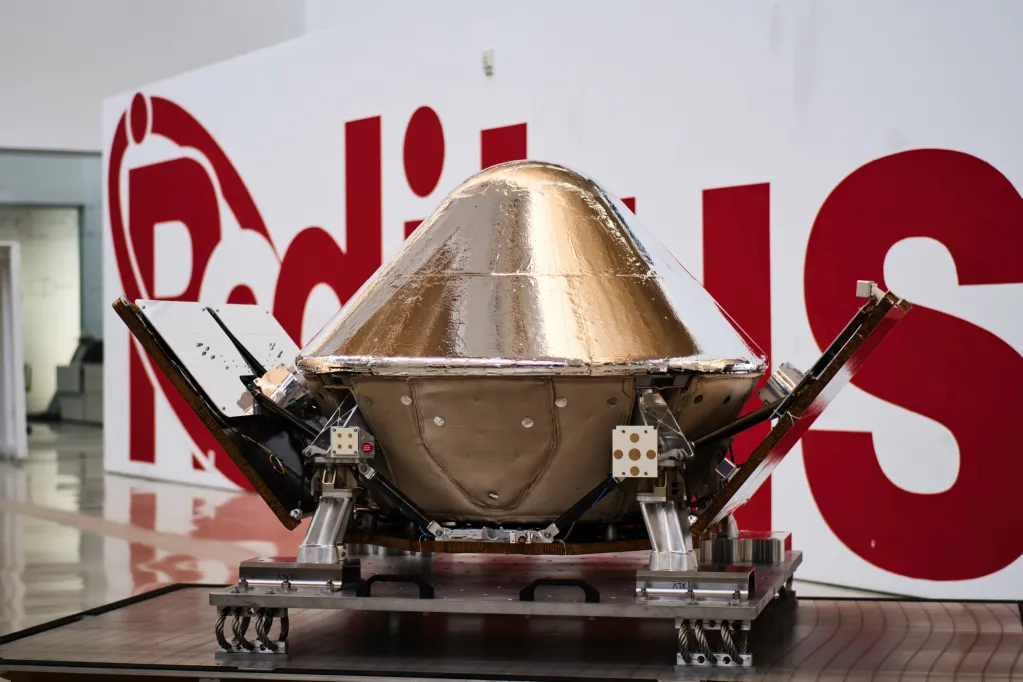
HARDWARE ALERT: ENOS-1 ASSEMBLY COMPLETE
Reditus Space, an emerging player in orbital logistics, has finalized its first recovery asset. According to SpaceNews, the company has completed assembly of ENOS, a 200-kilogram reentry vehicle slated for a SpaceX rideshare mission this fall. Following a two-month orbital duration, the craft is programmed for splashdown off the Florida coast.
ARCHITECTURAL SHIFT
ENOS diverges from traditional modular designs where small capsules decouple from larger satellites. Instead, Reditus CEO Stef Crum describes a “singular system” where over 80% of the vehicle’s mass returns to Earth. This high-efficiency recovery model allows the 200kg craft to host approximately 60kg of payload, a significant mass-fraction improvement over conventional competitors.
TECHNICAL SCHEMATIC
- Thermal Protection: The craft utilizes RHEA, a proprietary shielding material developed with NASA assistance. While RHEA effectively blocks reentry heat, it presented design challenges by trapping internal heat during the orbital phase.
- Consumables: A detachable “backpack” containing solar arrays and radiators provides power and cooling in vacuum. This unit is jettisoned prior to reentry.
- Utility: Initial customers include pharmaceutical and semiconductor firms seeking microgravity manufacturing environments. The vehicle also doubles as a testbed for hypersonic technologies.
MARKET CONTEXT
Despite a lean team of 12 and $7.1 million in seed funding, the ENOS demonstrator moved from concept to flight-ready in just 15 months. Reditus enters a market increasingly pressured by SpaceX’s massive Starfall reentry vehicle. However, leadership views SpaceX’s entry as an infrastructure-level endorsement of the recovery sector rather than a direct threat to specialized platforms.