Red Planet Stagnation: The Ghost of Viking 1
NASA marks the 50th anniversary of its landmark Viking 1 landing amid concerns that current budgetary shifts and mission cancellations could trigger another multi-decade gap in Mars exploration.
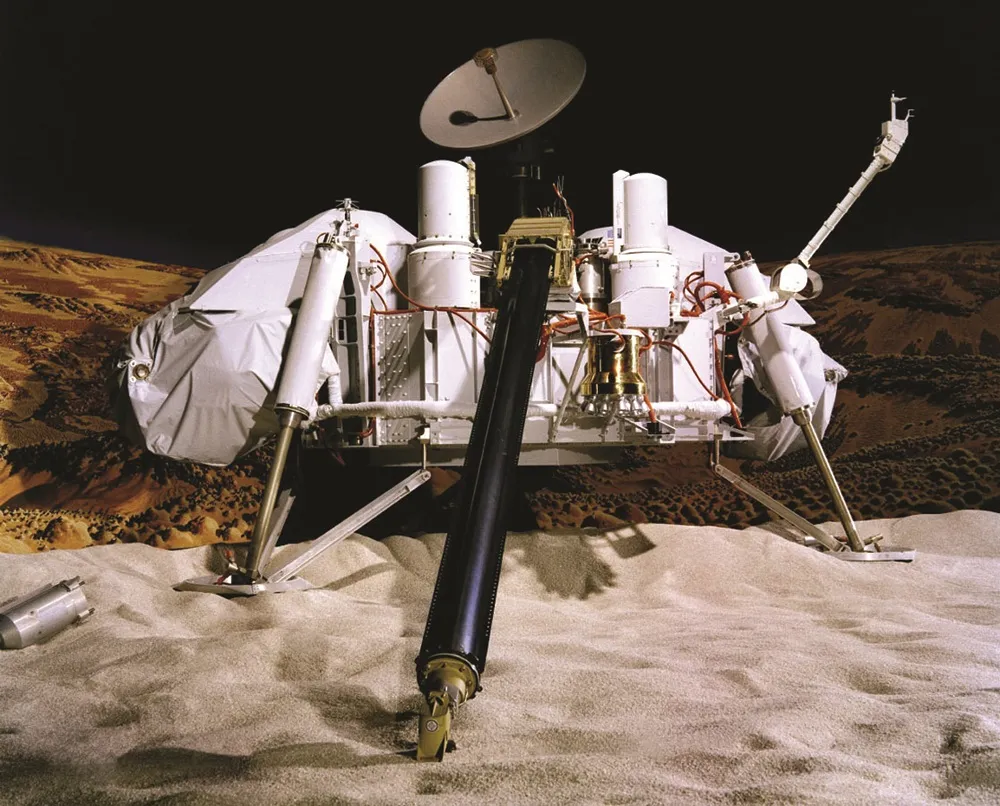
Terminal Access: Viking Legacy vs. Modern Inertia
Fifty years ago, on July 20, NASA’s Viking 1 became the first spacecraft to successfully land and operate on Mars. According to SpaceNews, the mission was a high-risk, high-reward flagship that cost approximately $8.6 billion in inflation-adjusted currency. While Viking 1—and its twin, Viking 2—established a foundational understanding of Martian chemistry, the achievement came with a heavy price: a twenty-year drought in Red Planet exploration that lasted until the 1997 Pathfinder landing.
Industry veterans, including former mission director Tom Young and Orbital Sciences co-founder Dave Thompson, recently reflected on this era. They characterized Viking as a mission that exceeded normal risk parameters, justified only by its immense scientific importance.
The Prospect of a New Gap
History may be repeating itself. The recent restructuring and effective cancellation of the Mars Sample Return (MSR) program has left a vacuum in NASA's long-term planning. While the Perseverance rover continues to cache samples, there is no longer a clear path for their recovery. NASA’s current 2028 manifests rely heavily on external partnerships rather than traditional flagship science:
- Rosalind Franklin: An ESA-led rover with NASA support.
- SR-1 Freedom: A nuclear propulsion test-bed exceeding $2 billion.
- Commercial Ventures: Small-scale payloads with firms like Relativity Space.
Planetary scientist Jim Bell notes that while commercial and small-scale missions provide value, they cannot replace the "flagship" science of a Viking or MSR. As NASA shifts resources toward lunar operations, the Mars science community warns that the agency lacks the risk tolerance or funding to sustain its 30-year streak of Martian presence. Without a strategic pivot, the post-Viking silence of the 1980s may return.