Quantum Optics: New Jersey Sky Displays Supernumerary Phenomena
Atmospheric interference patterns over New Jersey have revealed rare supernumerary rainbows, providing a visual demonstration of light’s wave-like nature through small, uniform water droplets.
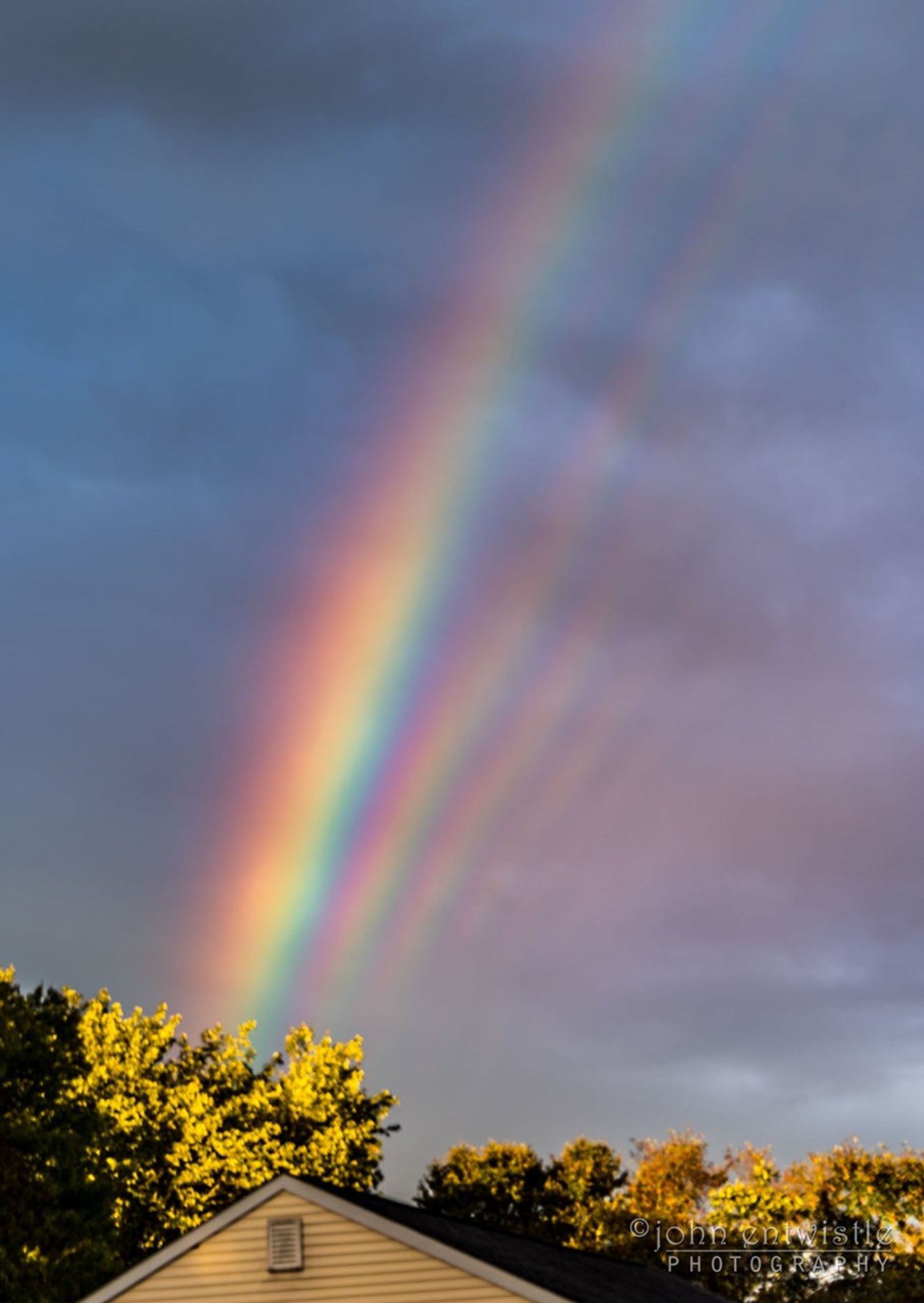
DATA LOG: ATMOSPHERIC ANOMALY
Recent imaging data confirms a high-fidelity atmospheric event over New Jersey. According to NASA Breaking News, a rare sequence of supernumerary rainbows has been documented, showcasing a complex interplay of light and water that deviates from standard refraction models.
While primary rainbows are formed by simple reflection and refraction within falling water drops, supernumerary fringes appear as faint, additional bands on the inner side of the primary arc. These are not products of geometric optics but are instead visual evidence of light behaving as a wave. As sunlight interacts with small, uniformly sized water droplets, it undergoes diffraction and interference. When the crests of the light waves align, the color intensity is amplified; when they offset, the signal is cancelled.
TECHNICAL ANALYSIS
The observation of these specific patterns requires precise environmental parameters. The presence of supernumeraries indicates that the localized rainfall consisted of drops with nearly identical diameters—typically less than one millimeter. Larger or varied drop sizes would cause the interference patterns to overlap, washing out the distinct fringes and returning the sky to a standard spectral arc.
This occurrence serves as a terminal-grade reminder of the wave-particle duality inherent in our atmosphere. For observers on the ground, the event provided a rare glimpse into the quantum-scale mechanics that govern planetary weather systems. The data captured reinforces current models of light wave interference first theorized by Thomas Young in the early 19th century.