Protocol Update: Uzbekistan Formalizes Entry into Artemis Accords
Uzbekistan has officially joined the Artemis Accords, marking a significant expansion of the international coalition for sustainable lunar and deep-space exploration.
# Data Ingestion: Uzbekistan Joins Artemis Coalition
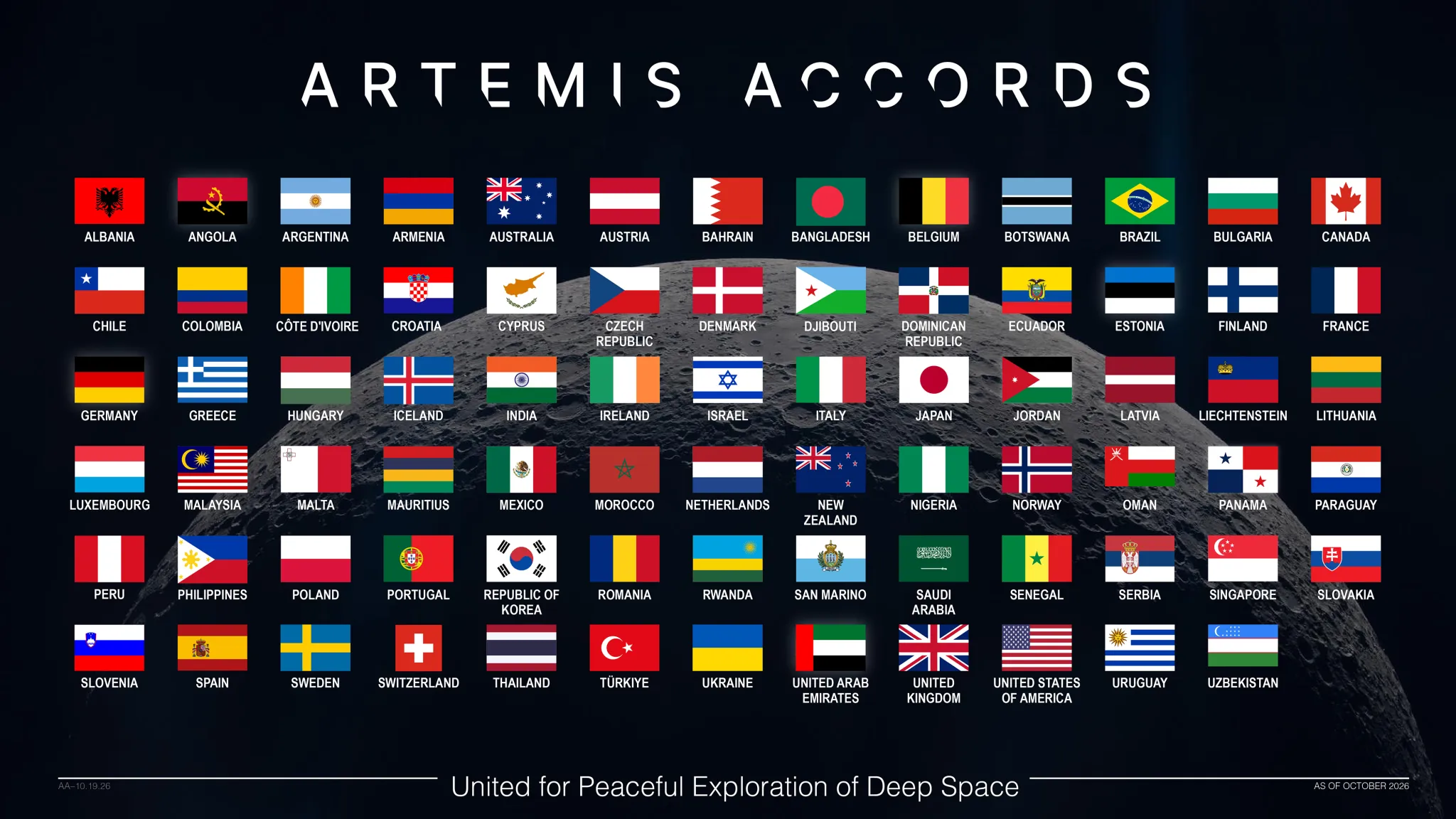
The geopolitical footprint of lunar exploration has expanded. According to NASA Breaking News, Uzbekistan has officially become the latest signatory of the Artemis Accords. The formalization took place during a ceremony at the Uzbekistan Embassy in Washington, where government representatives committed to a framework of transparent and peaceful space operations.
Operational Framework
Established in 2020 by NASA and the U.S. Department of State, the Artemis Accords serve as a non-binding set of principles designed to govern civil space exploration. By signing, Uzbekistan aligns its national space policy with the 1967 Outer Space Treaty and subsequent international conventions. The core mission parameters focus on the mitigation of orbital debris, the public release of scientific data, and the provision of emergency assistance to personnel in distress.
Strategic Expansion
Uzbekistan’s entry signals a growing consensus among Central Asian nations regarding the necessity of standardized protocols for the lunar surface and beyond. The nation joins a diverse coalition that includes traditional space powers and emerging technological hubs, all aiming to establish a permanent human presence on the Moon under the Artemis program. NASA Administrator Bill Nelson noted that the addition strengthens the global commitment to scientific discovery conducted with integrity and interoperability.
Technical Compliance
The Accords do not just dictate diplomatic intent; they mandate technical transparency. Signatories agree to establish 'safety zones' to prevent harmful interference and commit to the registration of space objects. As the Artemis missions progress toward the South Pole of the Moon, these protocols will be critical in managing resources and infrastructure among an increasingly crowded field of international actors.