PROTOCOL UPDATE: MITIGATING UNINTENTIONAL LUNAR IMPACTS
A Falcon 9 upper stage is set to collide with the Moon on August 5. SpaceX and NASA are now investigating new disposal protocols for high-energy missions to protect future lunar infrastructure.
Terminal Log: Orbital Mechanics
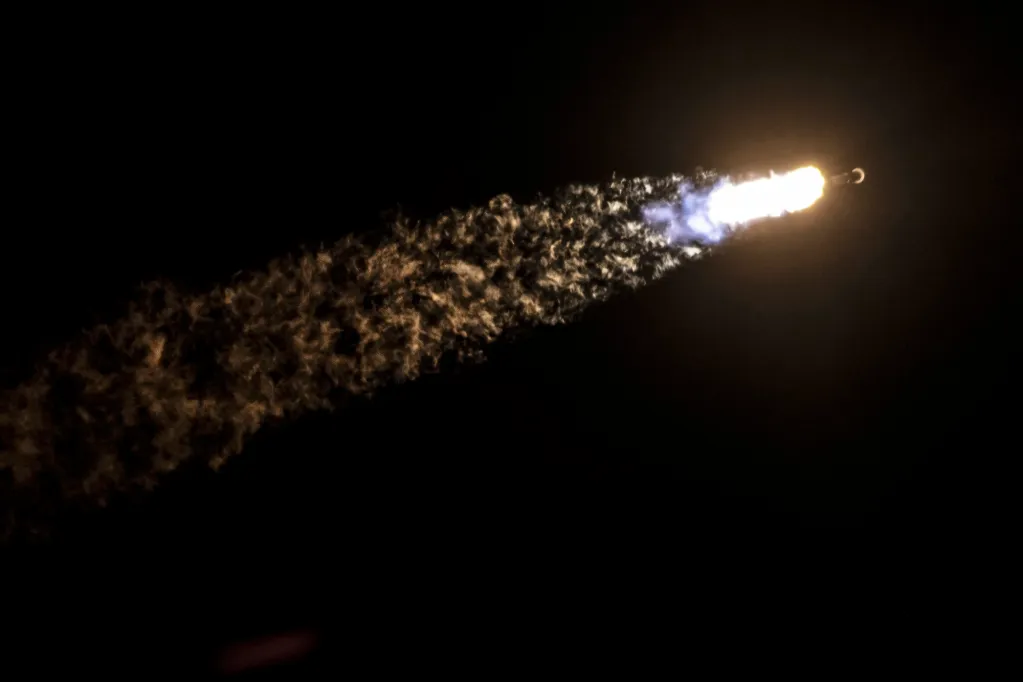
According to SpaceNews, a Falcon 9 upper stage from the January 2025 Firefly-ispace mission is locked on an terminal trajectory with the lunar surface. Impact is projected for August 5 at 02:35 Eastern near the Einstein crater on the western limb.
Impact Parameters
Astronomer Bill Gray, who first identified the collision path in April, estimates the kinetic energy release will equal two to three tons of TNT. While the impact will not be visible to the naked eye from Earth, orbital observers are positioning for data collection. NASA’s Lunar Reconnaissance Orbiter (LRO) and South Korea’s Danuri orbiter are scheduled to document the site, comparing post-impact plumes and cratering to baseline imagery.
Policy Shift
Julianna Scheiman, SpaceX director of NASA science and Dragon programs, confirmed that the collision was unintentional, caused by a convergence of solar activity and gravitational perturbations. Although SpaceX followed standard passivation protocols, high-energy trajectories currently lack the deorbit capabilities available for Low Earth Orbit (LEO) missions.
Historically, lunar impacts have served scientific purposes—notably the Apollo-era Saturn V third stages used for seismic mapping and the 2009 LCROSS mission that confirmed polar water ice. However, as the lunar environment becomes congested with planned bases and commercial assets, the risk profile of stray hardware is shifting. SpaceX and NASA have entered a partnership to define future disposal paths for high-energy missions within the Earth-Moon system to prevent hardware from becoming unintended lunar projectiles.