Protocol Termination: CHAPEA Mission One Crew Exits Habitat
NASA’s first Crew Health and Performance Exploration Analog (CHAPEA) team has completed a 378-day Mars simulation mission, providing critical human-performance data for long-duration spaceflight.
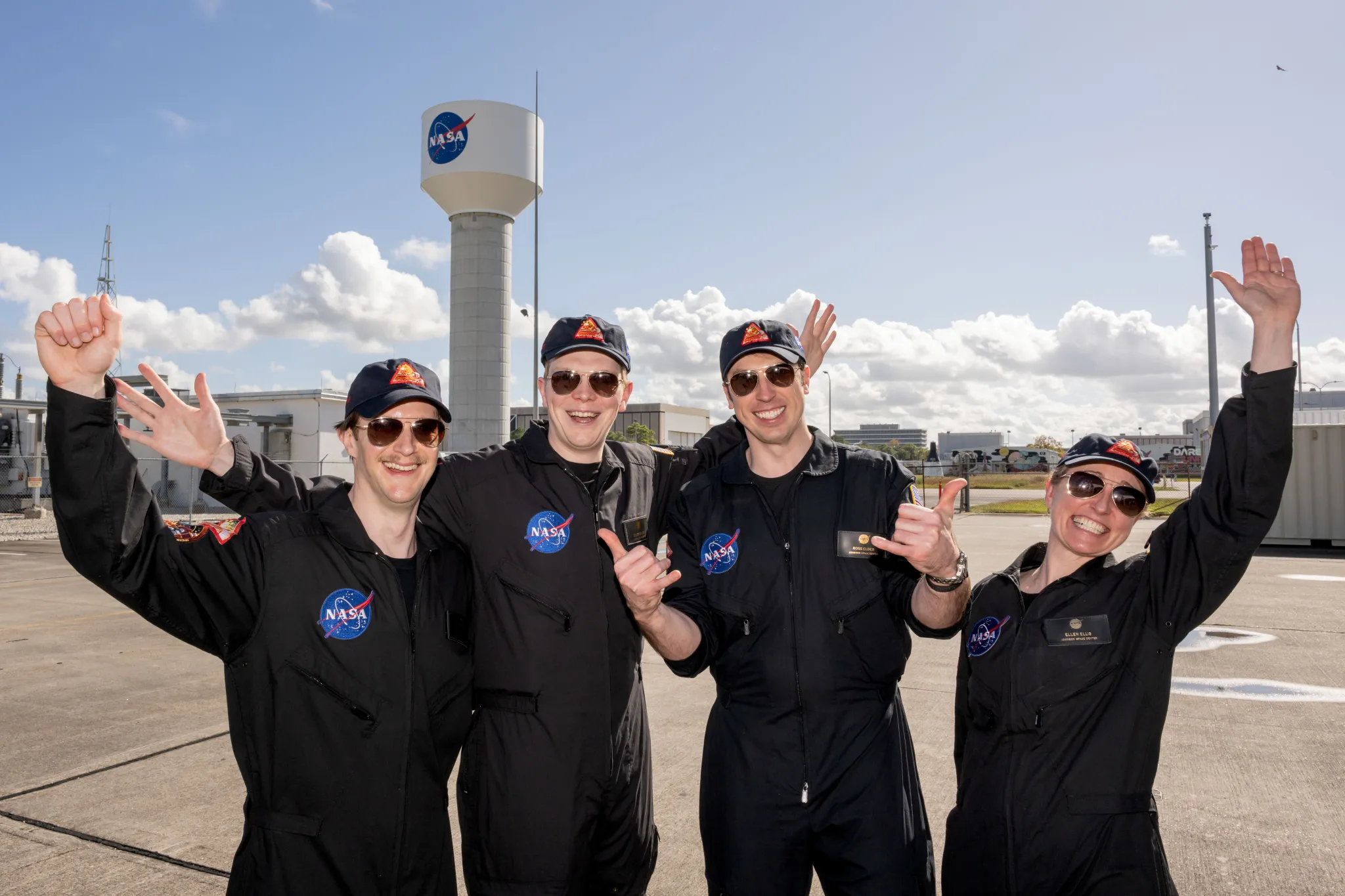
Mission Overview
NASA’s inaugural Crew Health and Performance Exploration Analog (CHAPEA) mission has reached its operational conclusion. According to NASA Breaking News, the four-person crew—Kelly Haston, Anca Selariu, Ross Brockwell, and Nathan Jones—has officially exited the Mars Dune Alpha habitat at Johnson Space Center in Houston after a duration of 378 days.
Operational Parameters
The crew occupied a 1,700-square-foot, 3D-printed enclosure designed to replicate the environmental and logistical constraints of a Martian surface mission. The protocol enforced strict limitations on resources, communication latencies, and environmental stressors typical of off-world operations. To maintain high-fidelity simulation, the team performed simulated Extra-Vehicular Activities (EVAs), managed crop growth systems, and executed maintenance cycles under high-pressure scenarios.
Data Acquisition and Objectives
The objective of CHAPEA is to quantify the physiological and psychological impacts of isolated, long-duration confinement. By monitoring nutritional intake, cognitive performance, and physical health, NASA researchers aim to establish baseline data for the upcoming Artemis missions and eventual human transit to Mars.
Strategic Trajectory
This mission marks the first of three planned CHAPEA analogs. The empirical evidence gathered from this 378-day cycle will refine requirements for life support systems and psychological support protocols. As the hardware for the Gateway station and lunar surface assets matures, these human-centric data points are essential for ensuring crew survival and operational efficiency in deep space environments.