PROTOCOL LEO: ESA INITIATES EUROPEAN ORBITAL STATION STUDIES
ESA has commissioned Airbus and OHB to lead feasibility studies for a post-ISS European presence in low Earth orbit, exploring infrastructure scenarios ranging from commercial dependence to full sovereign capability.
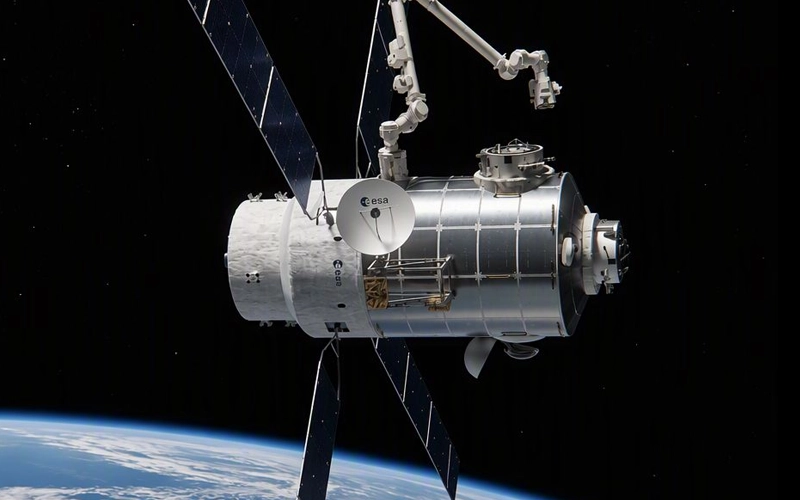
DATA FEED: ORBITAL INFRASTRUCTURE
The European Space Agency (ESA) has activated two parallel feasibility studies to determine the future of European presence in low Earth orbit (LEO). As the International Space Station (ISS) approaches its decommission phase, ESA is shifting focus toward sovereign and commercial alternatives to maintain human and robotic access to space.
OPERATIONS OVERVIEW
On September 29, the agency confirmed that industrial consortia led by Airbus Defence and Space and OHB will spearhead the research. According to European Spaceflight, these studies will integrate six additional industrial and institutional partners, though their identities remain classified under standard procurement protocols at this stage. The primary objective is to evaluate technical readiness and strategic options for ESA Member States.
STRATEGIC SCENARIOS
Daniel Neuenschwander, ESA’s Director of Human and Robotic Exploration, emphasized that these studies are designed to ensure "collective readiness." The agency is currently analyzing three distinct operational pathways:
1. Commercial Reliance: Primary utilization of externally provided commercial infrastructure.
2. Hybrid Integration: A limited European infrastructure contribution to an existing commercial space station program.
3. Sovereign Infrastructure: A European-led outpost providing independent LEO capabilities.
SYSTEM ANALYSIS
These studies represent a critical pivot point for European space policy. By tasking Airbus and OHB with these assessments, ESA is preparing for a transition from being a partner in a multinational project to potentially becoming a landlord or primary stakeholder in its own orbital real estate. This move addresses long-standing concerns regarding European autonomy in crewed spaceflight and microgravity research as the global LEO economy shifts toward a commercial model.