Protocol ENTOMOPHAGY: High-Protein insect diets for Mars transit
ESA researchers evaluate the feasibility of insect-based nutrition for long-duration deep space missions to mitigate mass constraints and ensure biological sustainability.
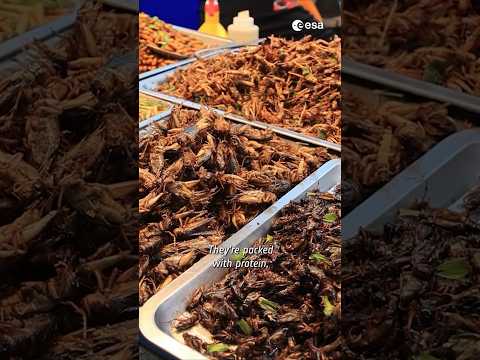
As the European Space Agency (ESA) matures its roadmap for human Mars exploration, the logistical constraints of closed-loop life support systems remain a primary hurdle. According to ESA YouTube, mission planners are actively investigating entomophagy—the consumption of insects—as a viable solution for sustaining astronauts during the multi-year transit and surface operations.
Nutritional Efficiency
Maintaining muscle mass and cognitive function in microgravity requires a high-protein diet. Traditional livestock are incompatible with spacecraft parameters due to extreme resource demands. Insects, specifically crickets or mealworms, offer a superior protein-to-mass ratio. They require significantly less water, feed, and volume compared to avian or mammalian sources, making them ideal for the constrained architecture of a Martian transit vehicle.
Waste-to-Protein Cycling
In a circular economy model, insect colonies function as bioconverters. They can be fed on organic waste products generated by the crew or greenhouse systems, effectively recycling nutrients back into the food chain with minimal loss. This reduces the total mass of pre-packaged food that must be launched from Earth, a critical factor for mission viability.
Psychological and Culinary Integration
While the nutritional data is objective, ESA acknowledges the psychological challenges of insect consumption. Research is ongoing into processing methods—such as grinding insects into flour for use in familiar food formats—to ensure crew morale remains high during the isolation of deep space.