PROTO-PLANETARY RECORD: INFANT WORLD IDENTIFIED IN ORION
Astrophysicists have confirmed the existence of IRAS 04125+2902 b, the youngest exoplanet ever detected, providing a rare window into the early stages of planetary formation.
Data Entry: Stellar Nursery 2024.11.B
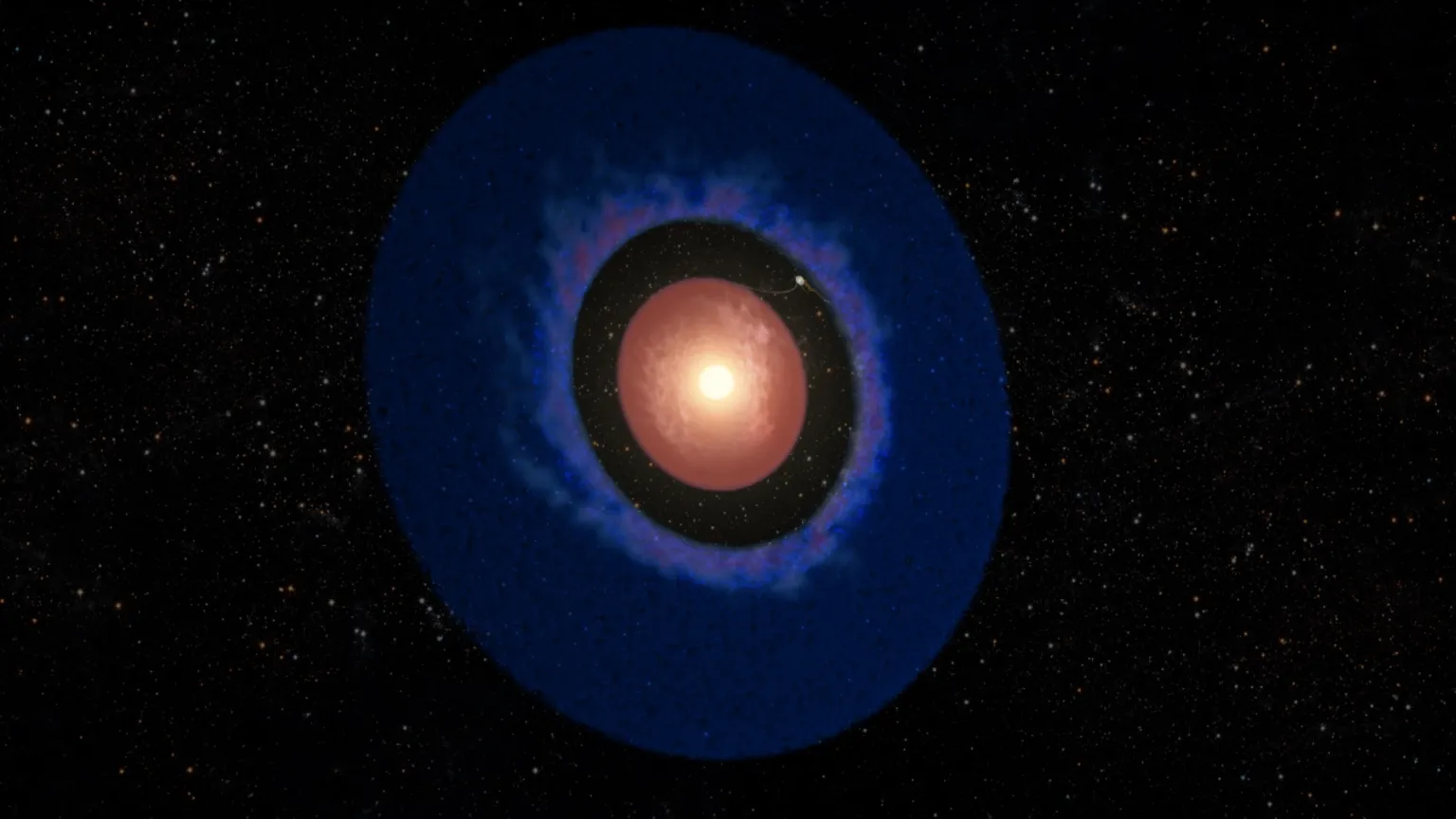
Deep-space surveillance has identified a record-breaking celestial entity. According to NASA Breaking News, astronomers have localized a "baby" planet, designated IRAS 04125+2902 b, which now stands as the youngest world ever confirmed via the transit method. Located within the Taurus-Auriga molecular cloud approximately 430 light-years from Earth, this protoplanet is estimated to be a mere 3 million years old—a chronological blink compared to Earth's 4.5 billion years.
//Technical Specifications
Observational data indicates the planet is roughly the size of Neptune, though its density remains low due to its extreme youth. It orbits a protostar that is still surrounded by a chaotic disk of dust and gas. Unlike most planetary systems where the disk obscures the view, this system's disk is warped and tilted, allowing telescopes like TESS (Transiting Exoplanet Survey Satellite) a clear line of sight to the planet as it passes in front of its host star.
//Mission Context
The discovery was facilitated by a multinational team utilizing the TESS platform and ground-based observatories. This finding challenges existing models of planetary migration, suggesting that large worlds can coalesce or reach their final orbital positions much faster than previously theorized.
As the cosmic dust settles around IRAS 04125+2902 b, it provides a functional blueprint for understanding how gas giants stabilize in high-radiation environments. Further spectroscopic analysis is scheduled to determine the chemical composition of its fledgling atmosphere.