PLATO Exoplanet Mission Clears Electronics Integration Milestone
ESA confirms the successful integration of the PLATO mission’s core electronics, signaling the spacecraft is ready for its 2026 launch to hunt for Earth-like worlds.
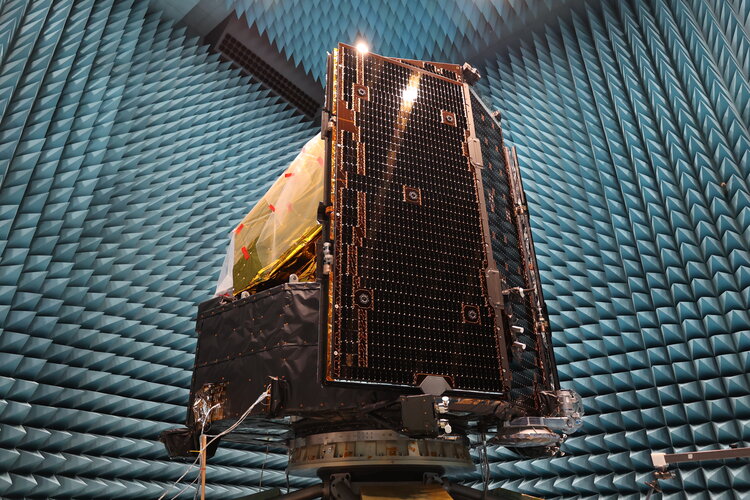
Mission Readiness Achieved
According to ESA, the PLATO (PLAnetary Transits and Oscillations of stars) mission has reached a critical hardware milestone. The spacecraft's complex electronics suite is now certified as ready for the rigors of deep-space operations. This technical validation ensures that the mission’s high-precision instruments can effectively process the massive data loads required to detect exoplanetary bodies.
High-Precision Sensing
PLATO is designed to monitor thousands of stars across the galaxy, searching for the minute dip in brightness that occurs when a planet transits its host star. To achieve this, the mission relies on a sophisticated array of 26 cameras—24 'normal' cameras and two 'fast' cameras. These sensors require incredibly stable electronic backbones to distinguish between stellar noise and the subtle signals of distant Earth-like worlds.
Launch Trajectory
With the electronics now flight-ready, the focus shifts to final assembly and vibration testing. As a key pillar of ESA’s Cosmic Vision program, PLATO is scheduled for a 2026 launch. Once operational at the L2 Lagrange point, it will provide unprecedented data on the sizes, masses, and ages of planetary systems across the Milky Way. ESA’s technical teams confirm that the system architecture meets all performance requirements for its multi-year survey.
Future Outlook
This integration success marks the transition from design and component testing to a unified flight configuration. By locking in the electronics phase, Europe moves a step closer to identifying the next habitable world.